Independent · Not a contractor
Exterior home repair
What fails on a house, why it fails, and what fixing it right involves
Houses fail in a predictable order. Water gets past the roof edge, the flashing or the grade, and everything downstream pays for it. We explain the failure first, tell you when it is a Saturday job, and connect you with a local contractor when it genuinely needs one.
- Roofing, siding, gutters, windows, garage doors, concrete, foundations, chimneys and storm shelters
- Storm-claim guidance before anyone climbs a ladder
- Written by a publisher with nothing to sell you but the truth about the job
Talk to a local pro
One free number for every trade below. Tap a button to call, or dial it from any phone.
We are a publisher, not a contractor, and may earn a referral fee when a call connects. How this site makes money.
1What good exterior home repair looks like
Two crews can quote the same job and leave you with houses that age completely differently. The difference is rarely the shingle, the siding panel or the window brand. It is the parts you cannot see once the job is finished: the flashing behind the trim, the underlayment at the eaves, the fasteners, and where the water goes after it leaves the roof.
Almost every exterior failure is a water problem wearing a different costume. Rot behind siding, a stained ceiling under the chimney, a heaved driveway and a cracked foundation wall usually trace back to water that was allowed to sit, wick or run where it shouldn’t. A repair that ignores the water path tends to come back.
Signs a job was done right
- Flashing is layered so each piece sheds onto the one below it, not behind it.
- Fasteners are where the manufacturer says, at the count it says. Over-driven or high nails are a common reason shingle warranties are denied.
- Downspouts discharge well away from the foundation, and the soil slopes away from the walls.
- New materials meet old ones with a planned transition, not a bead of caulk doing the work of flashing.
- You get photos of what was under the old material, and a written note of anything they found and fixed.
2Start with what is wrong
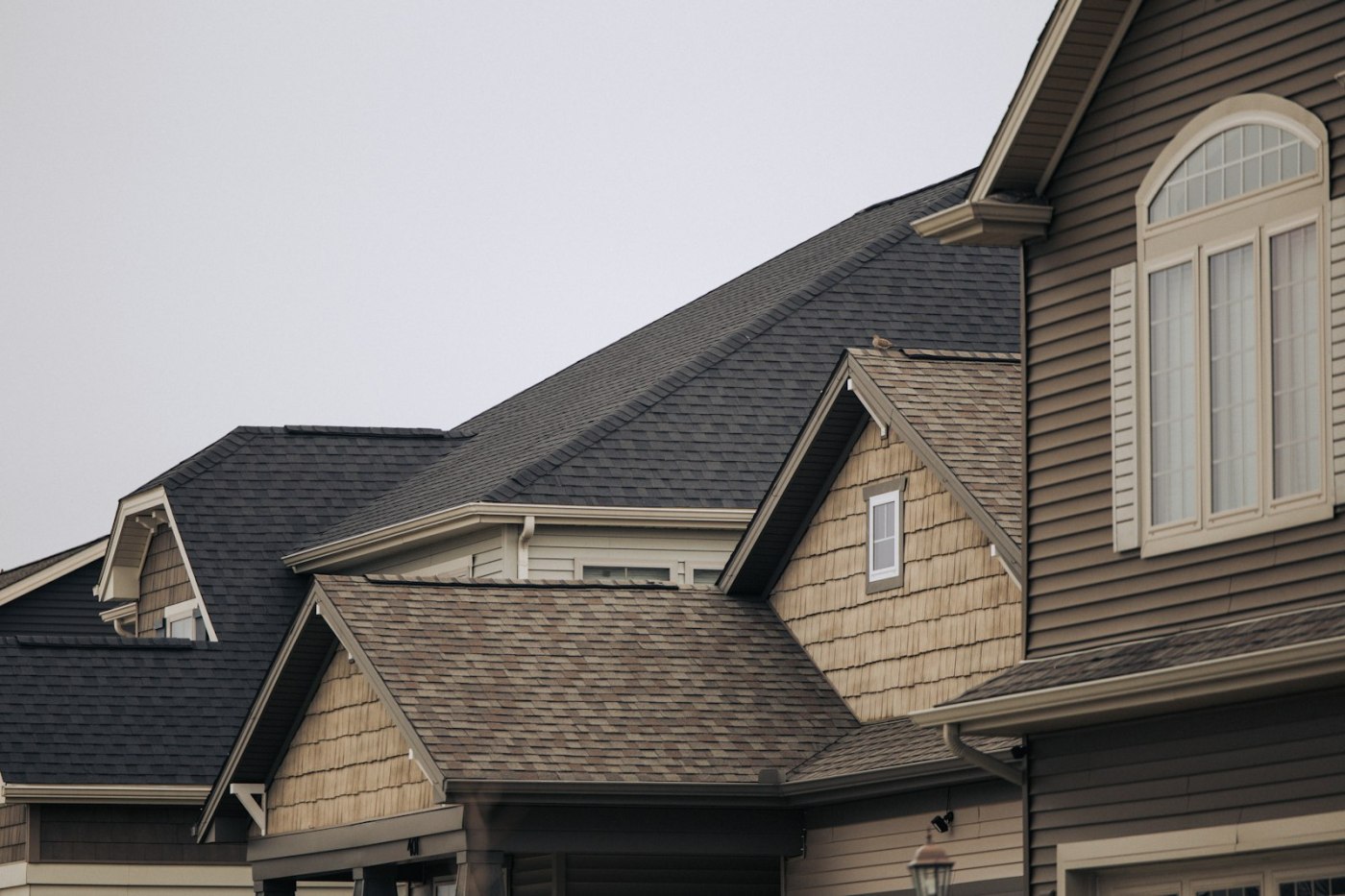
Nine parts of the building envelope cover nearly every exterior call. Start with the one you can see from the ground.
Safety first
Some problems are not a research project. A carbon monoxide alarm, a gas smell, a broken garage door spring or a ceiling that is visibly sagging needs a qualified person on site now. Call your utility, the fire service or a licensed contractor directly.
3Roofs: repair or replace
Most roofs that get replaced early are replaced because of storm damage, a failed detail that was never fixed, or an installation that was wrong from day one. Age alone is a weaker reason than most quotes make it sound.
| What you see | What it usually means | Usual answer |
|---|---|---|
| Leak at a chimney, wall or skylight | Flashing failure, not the field of the roof | Repair the flashing |
| Leak at a plumbing vent | Cracked rubber pipe boot | Replace the boot |
| Shingles lifted along one slope after wind | Seal strip failure or nailing too high | Repair, and check the nailing |
| Heavy granule loss, curling, brittle tabs | The roof is at or past its service life | Plan a replacement |
| Dented vents and gutters after hail | Possible hail damage to the shingles too | Get it inspected before you file |
| Sagging along the ridge or between rafters | Structural or decking problem | Have it inspected now |
Layers and decking
Under the model building code most US jurisdictions use, a new roof cannot go over two existing layers, and decking with wide gaps between the boards may need sheathing before new shingles go on. If your house is older, ask every contractor how they will handle both and get it in the quote, because that is where change orders come from.
Impact-resistant shingles
Shingles rated Class 4 under UL 2218 hold up better to hail, and some insurers offer a premium discount for them. Whether the upgrade pays back depends on your insurer and how often your area takes hail.
Roofing problemsRepair or replace?How old is my roof?Asphalt vs metalRoof replacement
4Gutters, siding and windows
These three work as one system. The gutters carry the roof’s water away, the siding and its weather barrier shed what the wind drives sideways, and the windows are the holes in that barrier that have to be flashed into it.
Gutters
Overflow in heavy rain is usually a sizing or downspout problem, not a clog. A gutter pulling off the fascia often means the fascia behind it is rotting. Downspouts that dump at the foundation are the single most common cause of wet basements and settling slabs, and extending them is a job most homeowners can do in an afternoon.
Siding
Siding is a rain screen, not the waterproofing. The house wrap or felt behind it does the real work, so soft spots, stains below windows and buckled panels are worth investigating before anyone re-sides. Houses built before the 1980s may have asbestos-cement siding; don’t cut, drill or sand it until it has been tested.
Windows
Fog between the panes means the insulated glass seal has failed. Often only the glass unit needs replacing, not the window, and the seal may still be under warranty. Condensation on the inside face in winter is usually indoor humidity, not a bad window.
| Problem | DIY? | Call a pro when |
|---|---|---|
| Downspout at the foundation | Yes, extensions or splash blocks | Water still reaches the wall or the yard slopes toward the house |
| Gutter pulling away | Sometimes, from a safe ladder | The fascia is soft or the run is on a second storey |
| Fog between panes | No | Always. Check the warranty first |
| Soft spots under siding | No | Always. Rot behind siding spreads |
Gutter problemsSiding problemsWindow problemsVinyl vs fiber cementSingle vs double pane
5Concrete and foundations
Concrete cracks. That is what it does, and control joints exist to decide where. What matters is whether a crack is moving, whether one side is higher than the other, and whether water is the reason.
The model residential code calls for the ground to fall at least 6 inches within the first 10 feet away from a foundation. Many settling slabs and damp basements are fixed by restoring that slope and moving downspout water away, before anyone talks about piers.
When it is worth a professional
- A crack that is widening, or one side is noticeably higher than the other
- Doors and windows that start sticking at the same time cracks appear
- Horizontal cracks or bowing in a block or poured basement wall
- A slab that has dropped at the garage or the house and is now a trip hazard
Concrete problemsFoundation problemsRepair or replace concrete
6When your house was built
A house doesn’t fail at random. It fails according to what it was built out of, and construction practice changed sharply every few decades.
Two houses on the same street with the same weather will fail in completely different ways if one went up in 1962 and the other in 2004. Knowing your era tells you which problems to look for first, and which quotes describe work your house does not need.
Houses built before 1978 may have lead paint. Under federal rules, paid work that disturbs painted surfaces on those homes has to be done by a lead-safe certified firm.
7After a storm
This is where homeowners lose the most money. Storm damage is hard to see from the ground, and the people who arrive first often follow the weather for a living.
Get the damage measured against your deductible. A claim you barely recover on can still count against you at renewal, and a contractor offering to cover your deductible is proposing something several states make illegal.
- Make it safe and stop the waterTarp or patch only what is actively leaking. Keep receipts; reasonable emergency repairs are usually covered.
- Document everythingDate-stamped photos of the roof edge, vents, gutters, siding, screens and the garage door, plus any interior damage.
- Get an independent inspectionHave a local contractor inspect and write up what they find before you file, so you know whether the damage clears your deductible.
- File and meet the adjusterHave your contractor there for the adjuster’s visit if you can. Ask for the adjuster’s estimate in writing.
- Compare the scope, not just the totalCheck that the estimate includes every damaged elevation, the gutters, the garage door and code-required items.
Storm damage repairHail damage roof repairInsurance claim after hail
8What drives the cost
Two quotes for the same job can be far apart and both be honest. The total moves with a handful of things you can check for yourself before you compare numbers.
| Cost driver | Why it matters | What to ask |
|---|---|---|
| Tear-off and disposal | Every existing layer has to come off and be hauled away | How many layers are coming off, and is disposal included? |
| What is underneath | Rotten decking, sheathing or fascia is found only once the old material is off | What is the unit rate for replacing decking or sheathing? |
| Access and height | Steep pitch, second storeys and tight lots take more labor and equipment | Is the price per square or per job, and does pitch change it? |
| Code items | Ice barrier, ventilation and flashing may need bringing up to current code | Which code upgrades are included and which are extra? |
| Material line | Builder-grade and premium lines differ in warranty and impact rating | Name the exact product, color and warranty tier. |
| Region and season | Labor rates and demand change after big storms | How long is this quote good for? |
Each cost page explains what the work involves, what drives the number in your area, and which parts you can do yourself.
9Choosing a contractor
A good proposal reads like a specification. If it just says “replace roof” with a number, ask for the detail before you compare anything else.
Every proposal should list
- Exactly what is being removed, and how disposal is handled
- The product by brand, line and color, and the warranty tier it qualifies for
- Flashing, underlayment, ice barrier and ventilation details, not just the visible material
- A unit price for hidden damage such as decking, sheathing or fascia
- Who pulls the permit, and who handles cleanup and nail sweeps
- Manufacturer warranty and workmanship warranty, stated separately
Red flags
- An offer to cover or waive your deductible
- Pressure to sign the same day, or a contract that assigns your insurance claim to them
- No local address, no license where your state requires one, or no certificate of insurance
- A price with no line items, or a refusal to name the product
DIY or hire a pro?
Do it yourself
- Downspout extensions and splash blocks
- Cleaning gutters from a safe single-storey ladder
- Re-caulking trim and replacing weatherstripping
- Regrading soil away from the foundation
Hire a pro
- Anything on the roof itself
- Garage door springs and cables
- Gas venting, chimneys and flues
- Rot behind siding, structural cracks and storm claims
Torsion vs extension springsStorm shelter codeHow to reach a contractor
10Exterior home repair FAQ
What exterior repairs should I fix first?
Anything that lets water in or is a safety risk: active roof leaks, failed flashing, downspouts dumping at the foundation, gas or chimney venting problems and broken garage door springs. Cosmetic work can wait; water damage compounds.
How do I know if my roof needs repair or replacement?
A leak at a chimney, wall, skylight or vent is usually a repairable flashing or boot problem. Widespread granule loss, curling or brittle shingles, or storm damage across several slopes points to replacement. Our repair-or-replace guide walks through it.
Should I file an insurance claim after a storm?
Only after you know the damage is clearly above your deductible. Get an inspection and photos first. A small claim can still affect your renewal, and some damage is cheaper to repair out of pocket.
Can I put a new roof over the old one?
Sometimes, but the model building code most areas use does not allow a new layer over two existing layers, and an overlay hides decking problems. Most contractors recommend a full tear-off.
Why are my gutters overflowing even when they’re clean?
Usually they are undersized for the roof area, pitched wrong, or have too few downspouts. Gutter guards don’t fix capacity, and some make overflow worse in heavy rain.
Is a crack in my driveway or foundation serious?
Hairline cracks that aren’t growing are normal. Cracks that are widening, offset so one side is higher, or horizontal in a basement wall need a professional, and water management is usually part of the fix.
Do I need a permit for exterior work?
Roof replacement, structural repairs, new windows that change openings and storm shelters often need a permit. Rules are local, so ask your contractor who pulls it and check with your building department.
How does this site make money?
We may earn a referral fee when a call from this site connects to a contractor. It doesn’t change what we publish, and pages for genuine do-it-yourself jobs say so. Full detail is on our disclosure page.
Sources and standards
- International Residential Code (2021), R401.3 drainage and R905 / R908 roof coverings and reroofing
- UL 2218, impact resistance of prepared roof covering materials
- NFPA 211, standard for chimneys, fireplaces, vents and solid fuel-burning appliances
- U.S. EPA Renovation, Repair and Painting (RRP) Rule for pre-1978 housing
- FEMA P-320 and ICC 500, safe rooms and storm shelters
Ready when you are
Get the job done once, done right
Tell a local contractor what you’re seeing. Ask for the cause, the scope and the warranty in writing before you sign anything.
877-360-4657
