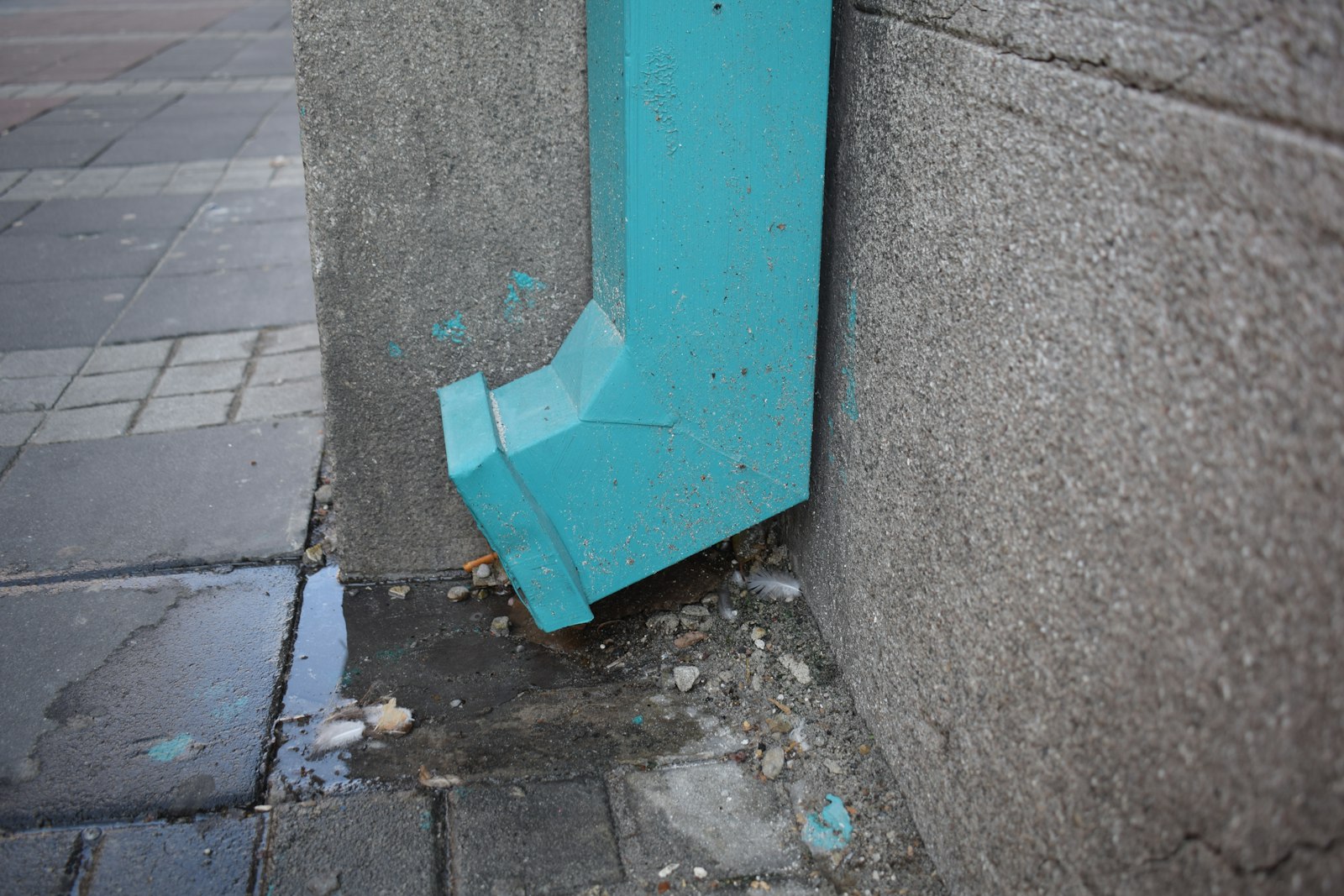
Your gutters collect water from the whole roof and concentrate it at a few points. If those points are at the foundation, the gutters are doing harm, not good. It’s the cheapest fix on this site and one of the most often skipped.
1Why it matters
- Wet basements and crawlspaces. Water soaking the soil at the wall finds cracks, joints and the gap where the wall meets the floor.
- Soil movement. Soil that is soaked in one spot and dry in another moves unevenly. On clay, that can show up as cracks and sticking doors.
- Washed-out beds and slabs. A downspout running onto a walk or patio edge undermines the soil beneath it over time.
- Splash-back. Water hitting hard ground at the wall splashes onto siding and trim.
2How to check yours
- Walk the house in the rainGo to each downspout. Note where the water actually ends up, not where the elbow points.
- Measure the dischargeIs it at least four feet from the wall? Closer than that, extend it.
- Check the slopeThe ground should fall away from the house. If it slopes toward the wall, water comes back no matter how long the extension is.
- Look for cluesErosion, a puddle that sits for days, moss, or a damp patch on the inside wall near a downspout all point to the same problem.
3Fixing it yourself
| Option | Works well when | Watch for |
|---|---|---|
| Rigid or flexible extension | There’s open lawn beside the downspout | Mowers and foot traffic knock them loose |
| Splash block | The ground already slopes well away | Too short on its own if the grade is flat |
| Flip-up or roll-out extension | The downspout is next to a walkway | Has to be put back down before rain |
| Buried drain line | You need to carry water past a walk or bed | Needs a safe outlet; check local rules before draining toward a neighbor or street |
An extension clipped onto the elbow costs little and takes minutes. Do every downspout, not just the one near the damp spot. Then fix any soil that slopes back toward the house.
If the basement is already wet or there are new cracks inside, fix the water first, then watch. Many problems ease once the water goes somewhere else.
4What drives the cost
Extensions and splash blocks are inexpensive. A buried line costs more because of trenching, the length of the run and how the outlet is finished. Regrading soil is mostly labor. None of these should be bundled into a large foundation quote without explanation.
5Questions
How far should a downspout discharge from the house?
At least four feet from the wall, onto ground that slopes away. Further is better if the ground is flat.
Can I run it into the storm sewer?
Rules vary. Some places restrict connecting downspouts to sewers. Check local code before you tie in.
Do I still need this if I have gutter guards?
Yes. Guards change what goes into the gutter, not where the water comes out.
Written by Jaylan Jones. I Like To Exterior Services earns a referral fee when a call connects to a contractor. See our business-model disclosure.

