Home/Torsion vs extension springs
Garage doors · Compare
Torsion vs extension garage door springs
Torsion springs last longer and control the door more evenly. Extension springs cost less and are what older doors have. Either way, the stored energy is genuinely dangerous. Neither type should be adjusted by an owner.
Springs do the heavy lifting on a garage door, not the opener. Which type you have changes how the door behaves, how long the springs last, and what can go wrong when one breaks.
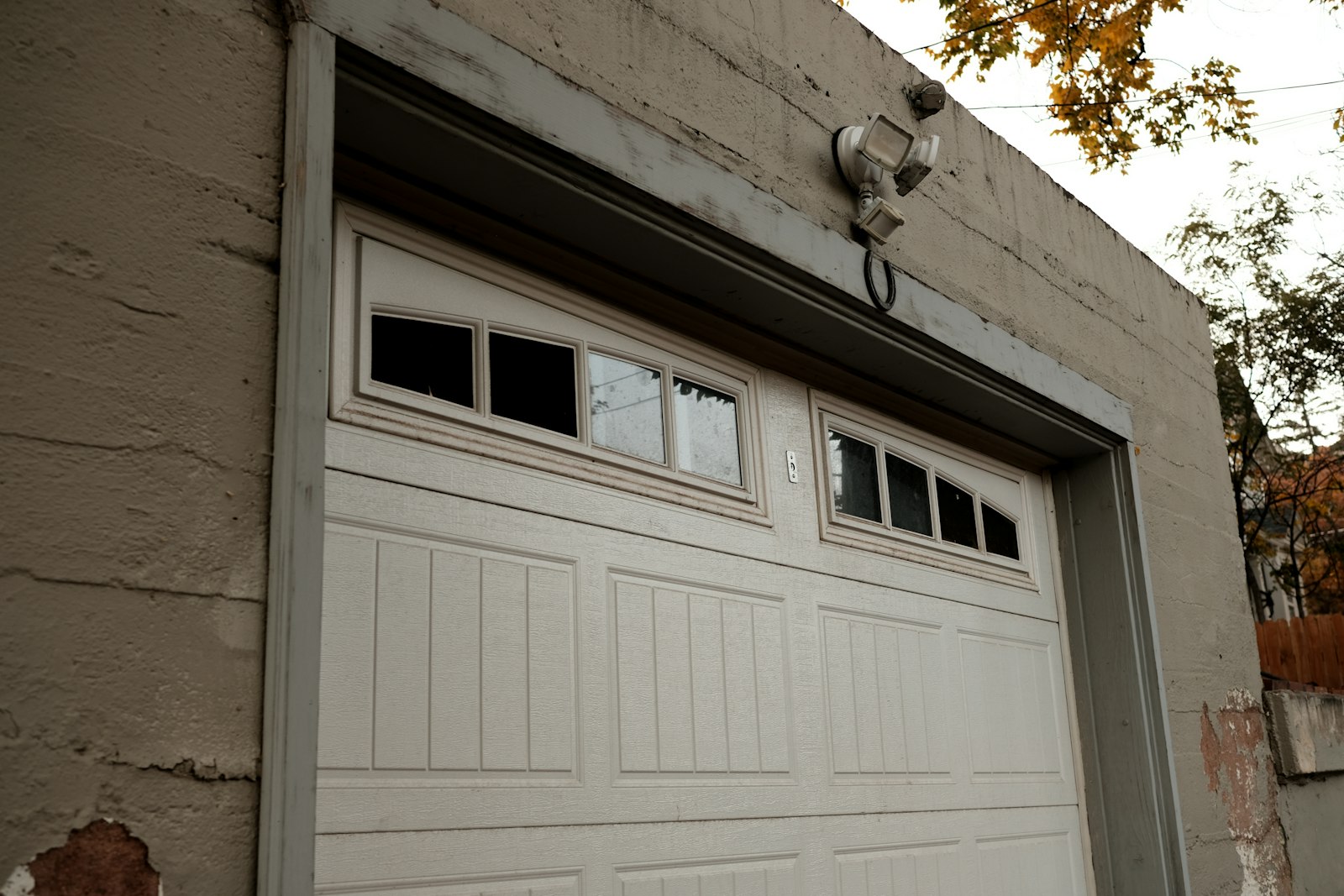
1Which one do you have?
Stand inside the garage with the door closed and look up, without touching anything.
- Torsion: one or two springs wrapped around a metal shaft on the wall directly above the door opening.
- Extension: long springs running alongside the horizontal tracks overhead, one on each side, stretching as the door closes.
2Side by side
| Factor | Torsion | Extension |
|---|---|---|
| Where it mounts | On a shaft above the door | Along the tracks |
| Lifespan | Lasts longer | Shorter |
| Door control | More even | Less even |
| Cost | Costs more | Costs less |
| Typical door | Newer installs | Older doors |
| When it breaks | Stays on its shaft | Needs a containment cable or it can fly across the garage |
| Owner adjustment | No | No |
3The containment cable
Extension springs must have a containment cable threaded through them. Without one, a broken spring can travel across a garage with real force. If yours has no cable, retrofit kits cost very little. See extension springs with no cable running through them.
Neither type should be adjusted by an owner. The stored energy is genuinely dangerous. Don’t loosen set screws, unhook springs or pull on cables. If a spring is broken, leave the door where it is and call a technician.
4Keep what you have, or convert?
Keep extension springs
- The door works smoothly and evenly
- Containment cables are in place, or you add them
- Budget is tight
- The headroom above the door is limited
Go torsion
- You’re replacing the door or the spring system anyway
- The door is heavy or lifts unevenly
- You want longer service life
- You’d rather not rely on containment cables
Either way this is a job for a technician. Ask for the spring type, the quote for both sides, and whether cables, rollers or bearings are included, in writing.
Talk to a local garage door technician. Don’t run the opener on a door with a broken spring.
877-360-46575Questions
How do I know a spring has broken?
Often a loud bang with nothing visibly wrong, followed by a door that won’t lift. See loud bang from the garage with nothing visibly wrong and door rises a foot then stops.
Can I replace a spring myself with a kit?
We don’t recommend it. Neither type should be adjusted by an owner, and the stored energy is genuinely dangerous.
Are torsion springs worth the extra cost?
They last longer and control the door more evenly. If the door is being replaced or the springs are failing anyway, they are usually the better choice.
Written by Jaylan Jones. I Like To Exterior Services earns a referral fee when a call connects to a contractor. See our business-model disclosure.
877-360-4657Talk to a local pro
One free number for every trade below. Tap a button to call, or dial it from any phone.
We are a publisher, not a contractor, and may earn a referral fee when a call connects. How this site makes money.

