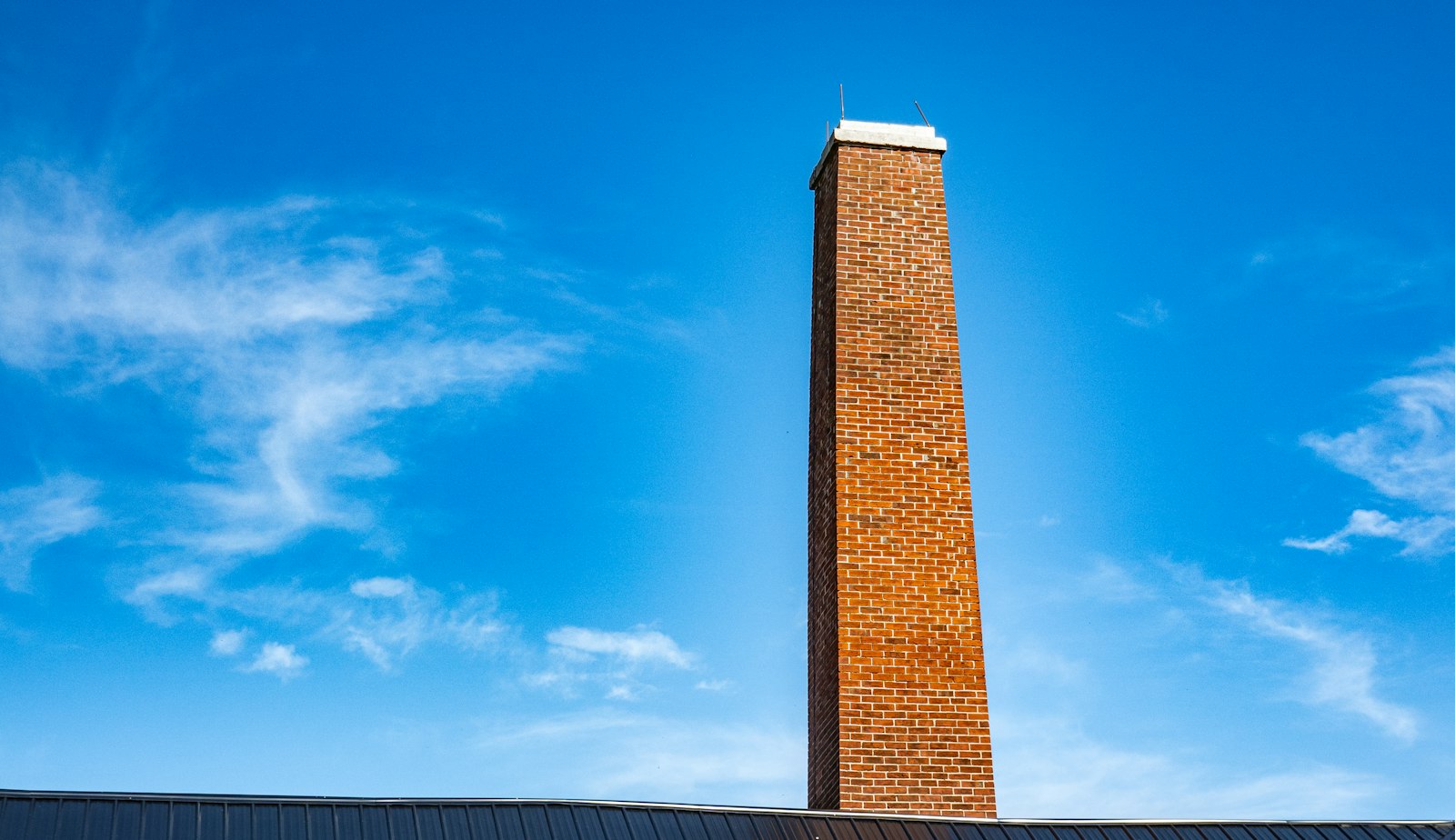
Crown damage is easy to miss because it’s at the very top of the house. It often shows up first as flaking brick near the top of the stack, or water inside the chimney.
1Why crowns crack
- Built with mortar. Many crowns are just a mortar wash smeared across the top. It’s weaker than a proper concrete crown and cracks sooner.
- No overhang. A crown that doesn’t extend past the brick lets water run straight down the face of the chimney.
- No gap at the flue. The flue tile heats and expands. A crown bonded tight to it can crack as the tile moves.
- Freeze-thaw and age. Every winter widens small cracks a little more.
2How to check what you’re dealing with
- Look from the groundWith binoculars, look for cracks, missing chunks, or plants growing on top of the chimney.
- Check the top courses of brickFlaking brick or crumbling mortar near the top suggests water is getting in from above.
- Look insideWater in the firebox, rust on the damper, or white staining on the flue can point to a crown or cap problem.
- Ask at the inspectionAsk the inspector to photograph the crown so you can see it yourself.
3Fixing it
Do it yourself
- Watch for signs from the ground
- Fit a cap so less water reaches the top
- Book the annual inspection and ask about the crown
Hire a pro
- Sealing hairline cracks with a crown coating
- Replacing a broken or mortar-wash crown
- Repairing brick damaged by water from above
- Any work at roof height
A properly built replacement crown slopes away from the flue, overhangs the brick with a drip edge, and leaves a flexible gap around the flue tile. Ask the contractor to describe how theirs will be built.
The crown is at the highest point of the house. Don’t climb up to inspect or patch it unless you’re equipped and trained for roof work.
4What drives the cost
Sealing small cracks is the low end. Replacement costs depend on the chimney’s size and number of flues, roof height and pitch, and whether the top courses of brick also need rebuilding. Fixing it early keeps it a crown job instead of a masonry job.
Talk to a chimney pro about sealing or replacing it before water damages the brick below.
877-360-46575Questions
Is a crown the same as a cap?
No. The crown is the masonry top of the chimney. The cap is the metal cover over the flue opening. You want both.
Can a cracked crown be sealed?
Hairline cracks often can, with a coating made for crowns. Wide cracks, missing pieces or a mortar-wash crown usually mean replacement.
What happens if I ignore it?
Water keeps getting into the masonry, and freeze-thaw damages the brick and mortar from the top down.
Written by Jaylan Jones. I Like To Exterior Services earns a referral fee when a call connects to a contractor. See our business-model disclosure.
877-360-4657Talk to a local pro
One free number for every trade below. Tap a button to call, or dial it from any phone.
We are a publisher, not a contractor, and may earn a referral fee when a call connects. How this site makes money.

