You can often spot a missing cap from the ground. Look at the top of the chimney: if you can see the open end of the flue tile with nothing over it, there’s no cap.
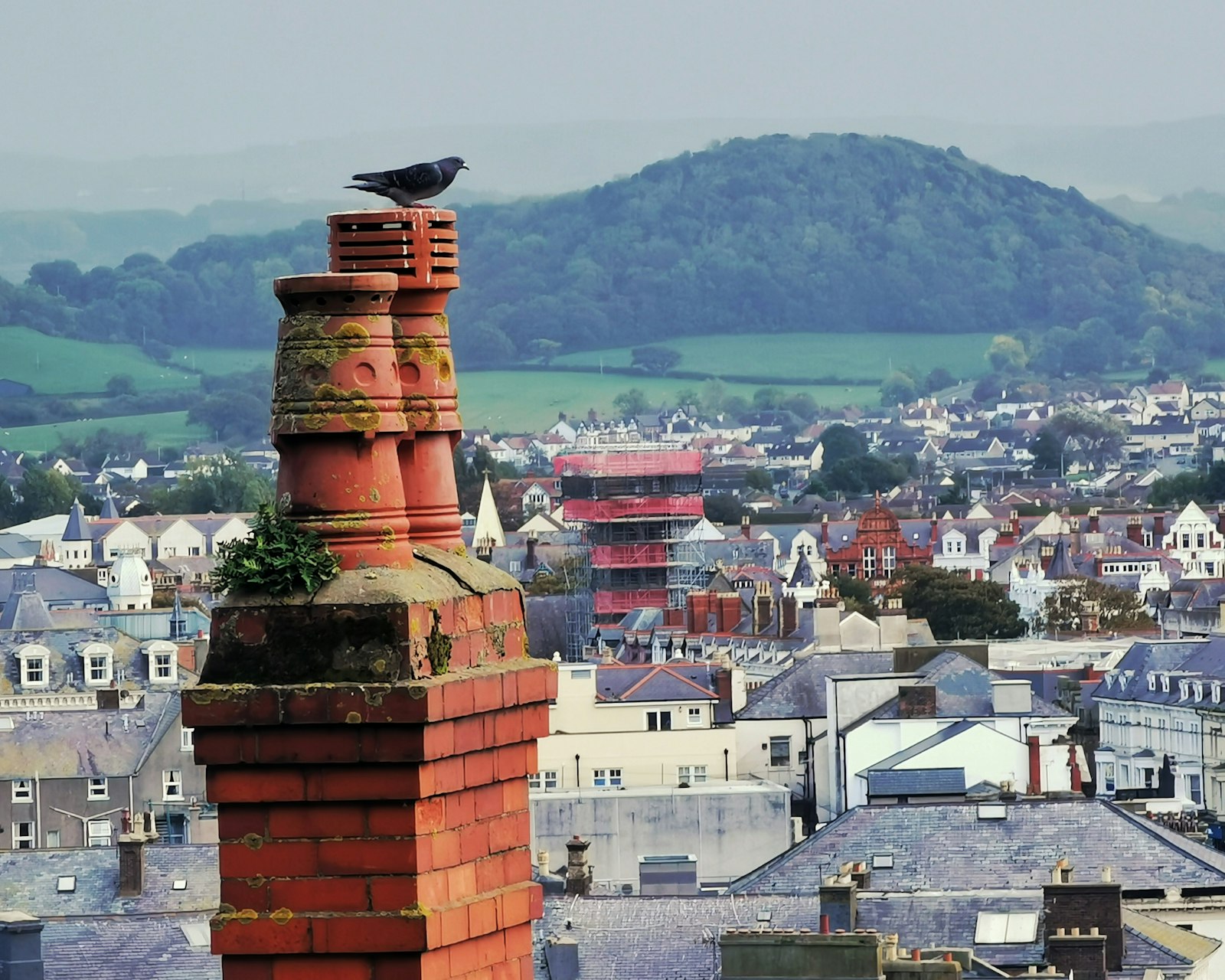
1Why an open flue causes trouble
- Rain. Water inside the flue rusts dampers and metal parts, soaks the masonry, and speeds up freeze-thaw damage.
- Animals. Birds and squirrels nest in open flues. Nests block the flue, and blocked flues can’t vent smoke or combustion gases.
- Debris. Leaves and twigs build up at the smoke shelf or damper.
- Downdrafts. Wind blowing across an open flue can push smoke back into the room.
2How to check
- Look from the groundUse binoculars to look at the top of the chimney for a metal cap or screen over each flue.
- Listen and look insideChirping, scratching, or twigs falling into the firebox suggest nesting.
- Check for waterRust on the damper, or water or stains in the firebox after rain, point to an open flue.
- Count the fluesSome chimneys have more than one flue. Each one needs covering.
3Fitting a cap
Measure the outside of the flue tile where it sticks out above the crown, and buy a cap sized for it, with a mesh screen. Most single-flue caps clamp or screw onto the tile. Stainless steel lasts longer than galvanized.
Good to do yourself
- A low, walkable roof you’re comfortable on
- A single round or square flue tile
- No signs of animals inside
Leave the roof to someone else
- Steep, high or slippery roofs
- Multiple flues needing a custom cap
- Animals already nesting in the flue
Roof falls cause serious injuries. Don’t work on a roof alone, in wet or windy weather, or without proper ladder setup. If the roof is steep or high, have the cap fitted during your annual chimney inspection instead.
Don’t seal a cap over a flue with animals inside. Make sure they’re out first. Rules for removing some wildlife vary by state, so check locally.
4What drives the cost
A standard cap for a single flue is one of the cheapest chimney fixes there is. Costs go up for multiple flues, unusual sizes, copper or decorative caps, and steep roofs if someone else fits it. It’s one of the jobs we list as something you should not be paying much for.
5Questions
Does a gas appliance flue need a cap?
Gas vents use their own listed termination caps. Don’t swap or modify those. If you’re unsure what’s on your chimney, ask at your next inspection.
Will a cap stop my chimney leaking?
It stops rain falling straight down the flue. Leaks at the ceiling are usually flashing; see the staining guide below.
How often should a cap be checked?
At your annual inspection. Mesh can clog with soot or leaves and restrict the draft.
Written by Jaylan Jones. I Like To Exterior Services earns a referral fee when a call connects to a contractor. See our business-model disclosure.

