Home/Roofing/Rust below the chimney flashing
Roofing · Homes built before about 1940
Rust streaks below the chimney flashing
Original galvanized flashing corrodes through well before the masonry fails. Chimney flashing is the most common leak point on old roofs, and the one most often reused during a reroof.
This is most common in homes built before about 1940. The flashing around a chimney is two parts: step flashing woven into the shingles, and counter flashing set into the mortar joints that laps over it. When either rusts through, water gets behind the shingles and into the attic.
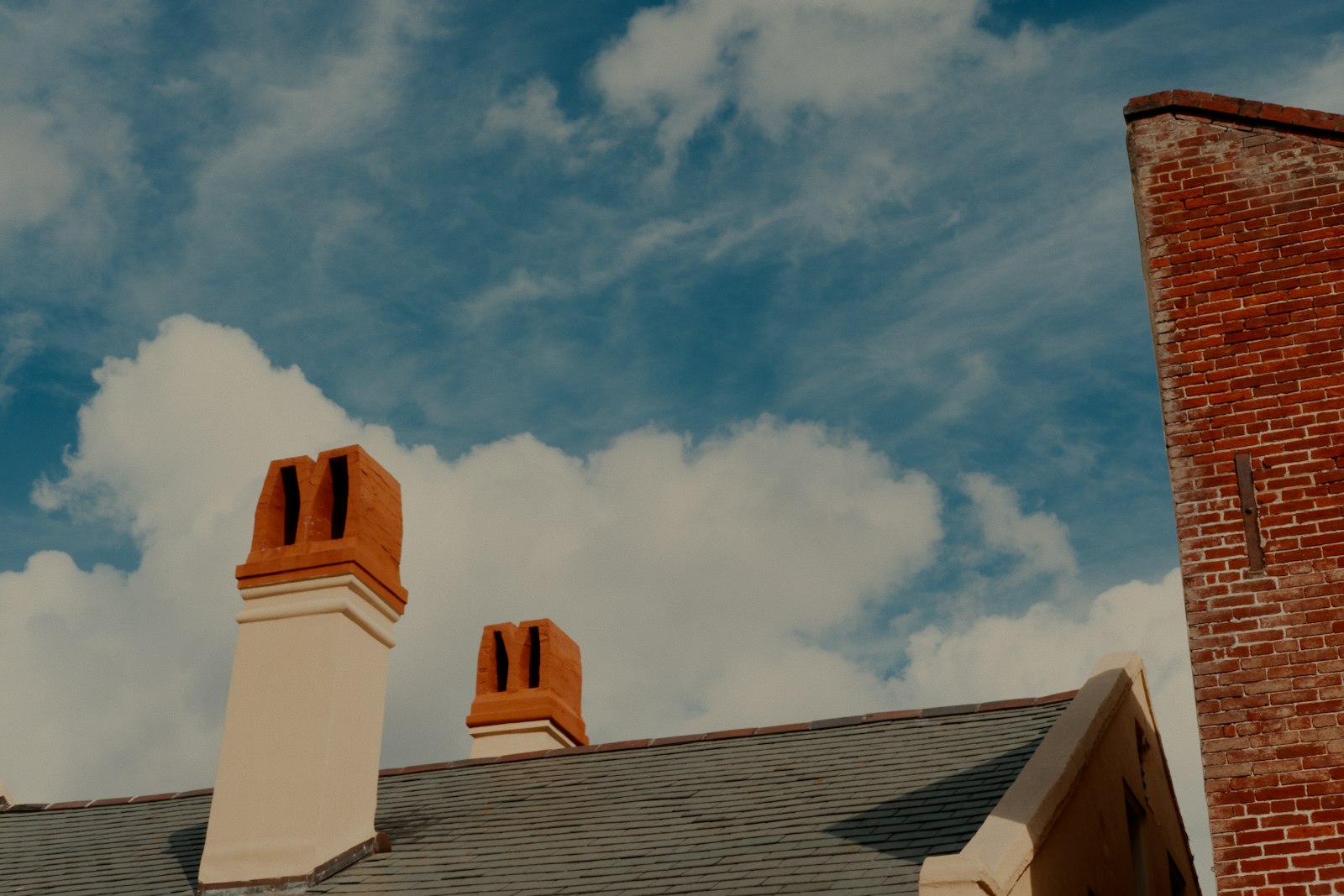
1Why it happens
- Galvanized steel wears out. The zinc coating wears away over decades and the steel underneath rusts.
- Water collects behind the chimney. The uphill side of a chimney catches water and debris, which keeps the metal wet.
- Reused at every reroof. Because replacing counter flashing means cutting into mortar, it often gets left in place and sealed over with caulk.
2How to check
- Look from the ground with binocularsRust streaks, holes or metal lifting away from the brick are the signs. Thick caulk or tar smeared over the flashing usually means earlier leak patches.
- Check the attic around the chimneyStains, damp wood or daylight around the chimney opening point at the flashing.
- Check the ceiling and walls near the chimneyStains that appear after rain and grow over time are typical.
3Fixing it
Do it yourself
- Spot the rust and leak signs from the ground and attic
- Photograph them for the contractor
- Make sure flashing replacement is written into any reroof quote
Hire a pro
- Replace step flashing as the shingles go back on
- Cut and reset counter flashing into the mortar joints
- Add a cricket behind a wide chimney if needed
- Coordinate any masonry repair at the same time
Caulk and roofing cement over rusted flashing buy time, not a fix. If the metal has rusted through, it needs to be replaced.
Chimneys sit on the roof slope, often high up. Do your checking from the ground and the attic, and leave the flashing work to a crew with fall protection.
4What drives the cost
The price depends on the size of the chimney, its position on the roof, the pitch, whether counter flashing has to be cut into the mortar, and whether the masonry needs repair first. It costs much less to replace during a reroof than as a separate job later.
Talk to a roofing contractor who will replace the flashing, not just caulk over it.
877-360-46575Questions
Can the old flashing be reused with a new roof?
It often is, because replacing it means cutting into mortar. On an old roof with galvanized flashing, it’s the most common leak point. Ask for replacement in writing.
Is the rust a chimney problem or a roof problem?
Usually a flashing problem. The masonry can be fine while the metal has rusted through. Check the masonry too while the crew is up there.
Will sealant fix it?
Only for a while. Sealant over rusted metal fails again. Replacement is the fix.
Written by Jaylan Jones. I Like To Exterior Services earns a referral fee when a call connects to a contractor. See our business-model disclosure.
877-360-4657Talk to a local pro
One free number for every trade below. Tap a button to call, or dial it from any phone.
We are a publisher, not a contractor, and may earn a referral fee when a call connects. How this site makes money.

