Almost every slab cracks somewhere. Control joints are there to decide where. When a crack starts at a corner instead, it usually means the joints were too far apart, cut too late, or missing at that corner.
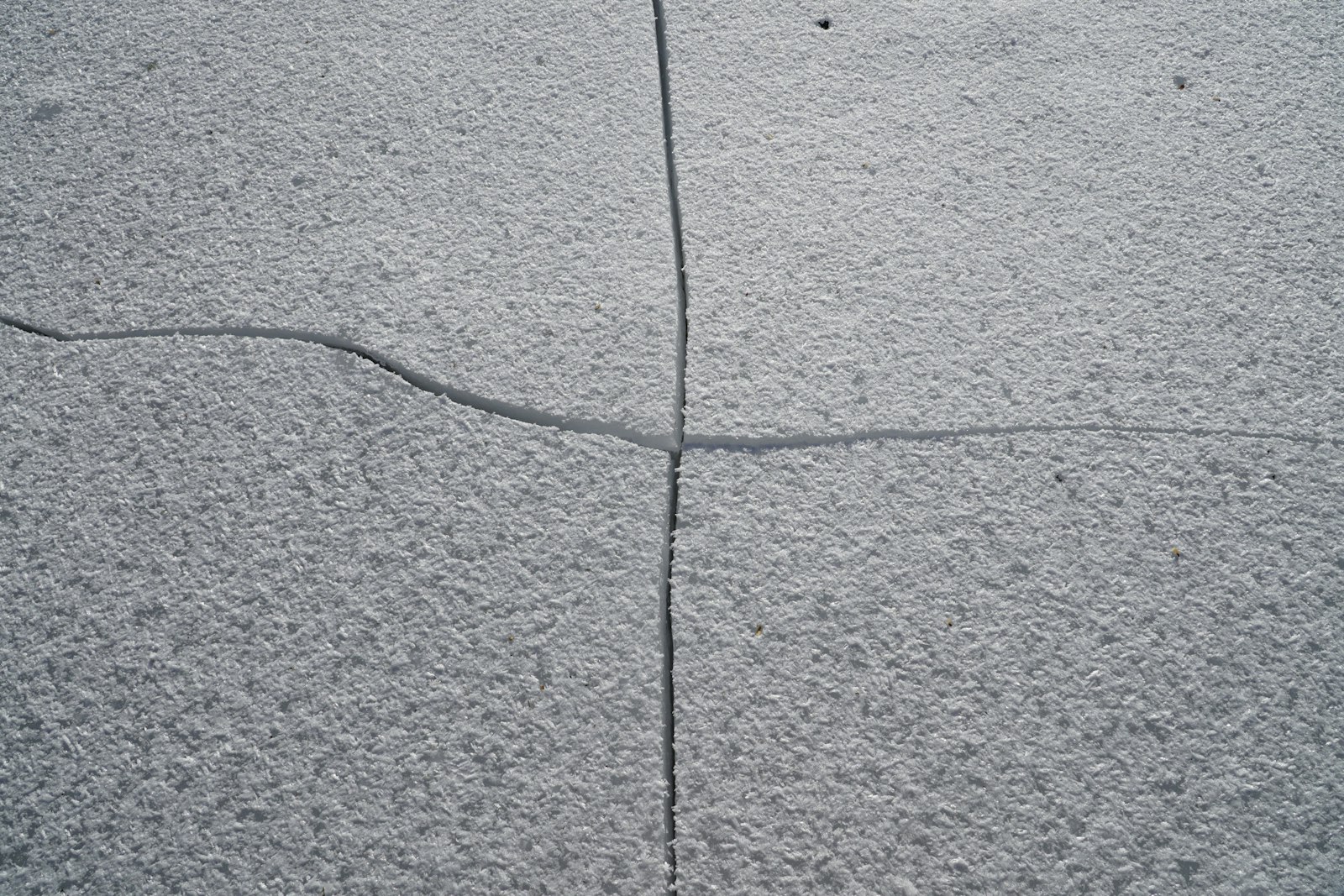
1Why cracks start at corners
- Shrinkage. Water leaves the concrete as it cures and the slab gets slightly smaller. The stress has to go somewhere, and it collects at corners.
- Inside corners. Where a slab turns a corner, such as around a step or a notch, there’s a natural weak point. Without a joint there, a crack often forms on the diagonal.
- Joint spacing. Joints placed too far apart, or cut too late, let the slab crack on its own schedule.
- Movement underneath. A corner that loses support from soft or washed-out soil can crack and drop. That’s a different problem from shrinkage.
2How to tell shrinkage from movement
| What you see | Likely meaning |
|---|---|
| Hairline, both sides level, not growing | Shrinkage. Cosmetic. |
| Widening over months | Movement. Keep watching and check the drainage. |
| One side lower than the other | Settling under the slab. See the settling guide below. |
| Opens in winter, closes in summer | Seasonal movement, often frost or wet soil. |
- Mark the endsDraw a pencil or marker line across each end of the crack and write the date.
- Photograph itTake a photo with a coin or ruler for scale so you can compare later.
- Check again each seasonIf the crack runs past your marks or gets wider, it’s moving.
- Feel for a lipRun your hand or shoe across it. A step you can feel or trip on is an offset, not shrinkage.
3What to do about it
For a stable hairline crack, sweep and blow it clean, then fill it with a concrete crack filler or flexible sealant. This keeps water and grit out, which matters most where it freezes. It won’t make the crack disappear, and it doesn’t need to.
If the crack is moving, sealing it only hides the symptom. Look for water that is softening the ground under that corner: downspouts emptying beside the slab, soil sloped toward it, or water pooling at the edge. Fix that first.
An offset crack on a walk or step is a trip hazard. Mark it and deal with it promptly, especially where visitors or older family members walk.
4What drives the cost
A tube of filler and an afternoon is the usual cost for a shrinkage crack. Costs only climb if the crack is a sign of settling, in which case the slab may need lifting or a section replaced, and the drainage fixed.
5Questions
Is a crack in a new driveway a defect?
Not by itself. Some shrinkage cracking is normal in the first year. Ask the installer about it if cracks are wide, offset, or ignore the joints entirely.
Should I seal hairline cracks?
It helps keep water and grit out, which matters in freezing climates. It’s optional for a stable crack in a mild climate.
When should I worry?
When it widens, steps out of level, or opens and closes with the seasons. Those are signs of movement, not curing.
Written by Jaylan Jones. I Like To Exterior Services earns a referral fee when a call connects to a contractor. See our business-model disclosure.

