A lifted slab is a trip hazard today and a cracked slab tomorrow. But the order matters: decide what the tree can tolerate, then decide what to do with the concrete.
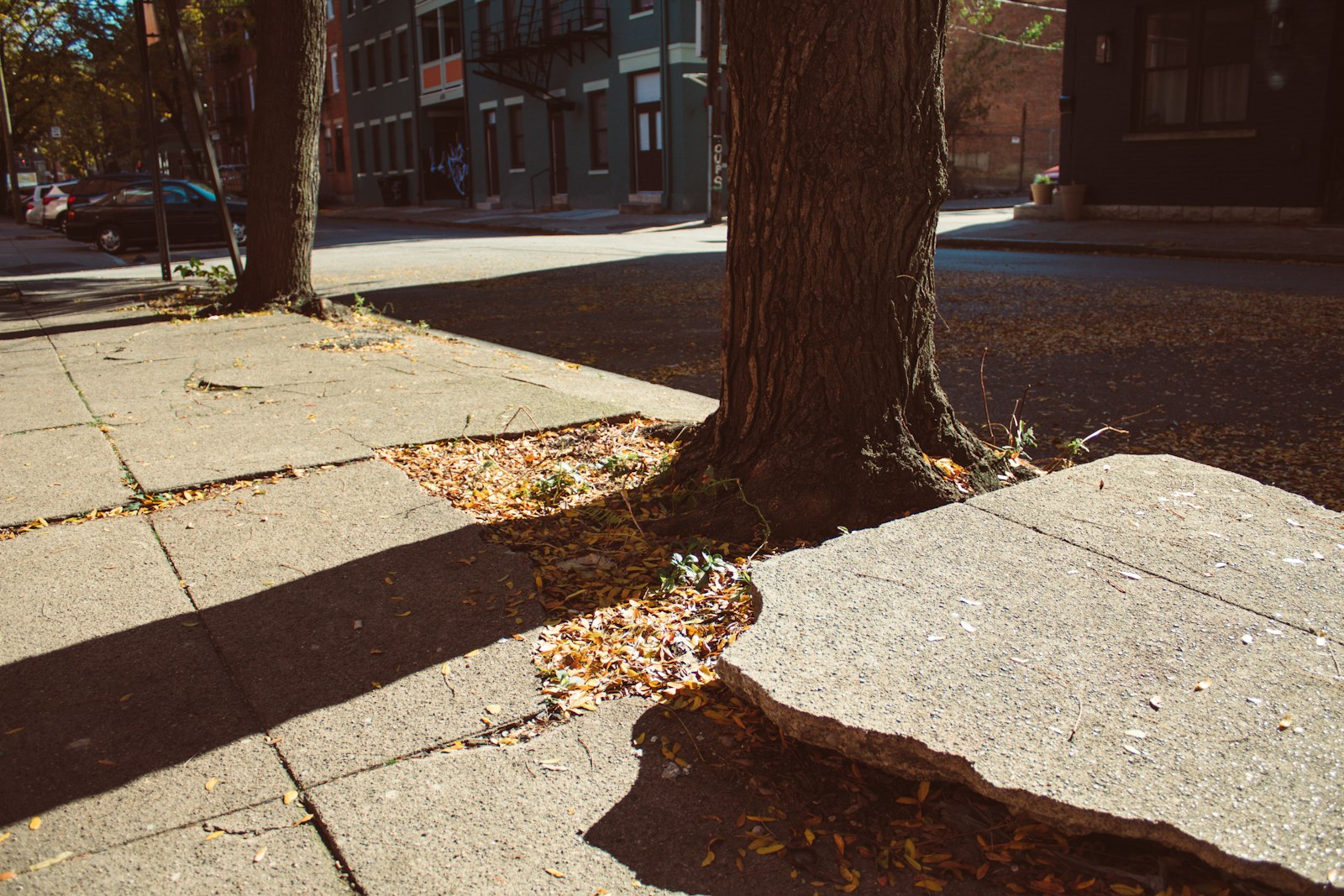
1Why roots lift concrete
- Moisture. The soil under a slab stays damper than the open ground around it, so roots spread there.
- Thickening. Roots grow in diameter every year. Even a slow change is enough to lift a slab edge.
- Shallow base. A thin base leaves little room between the root zone and the concrete.
2How to check what you’re dealing with
- Measure the liftNote how high the raised edge sits above the next slab. Even a small lip is a trip hazard on a walk.
- Find the treeIdentify which tree the root comes from and how close it is. Roots can travel well beyond the canopy.
- Check the tree’s healthDead branches, a lean, or fungus at the base are reasons to call an arborist before anyone digs.
- Check ownershipIf it’s a street tree or a neighbor’s tree, ask the owner or your city before cutting anything.
3Fixing it
Do it yourself
- Mark the raised edge so nobody trips
- Have the tree assessed before any root work
- Keep heavy vehicles off the lifted section
Hire a pro
- Grinding or ramping the raised edge
- Removing and repouring the section
- Root work, only on an arborist’s advice
- Installing a root barrier where suitable
Cutting a large structural root close to the trunk can weaken a tree’s anchorage. Get the tree assessed before anyone cuts.
4What drives the cost
Grinding a lip is a small job. Replacing a section adds tear-out, haul-away and a new pour, and possibly a reroute of the walk. An arborist’s assessment and any root work or barrier are separate costs. Ask whether the concrete contractor will coordinate with the tree work.
Talk to a concrete contractor about ramping or replacing the section once the tree has been looked at.
877-360-46575Questions
Can I just cut the root?
Not without an assessment. Some roots are safe to remove; others hold the tree up. An arborist can tell you which.
Will a new slab just lift again?
It can. That’s why replacements are often designed to bridge or curve around the root, sometimes with a root barrier.
Who pays if it’s a street tree?
That depends on your city. Ask your local public works or parks department before doing any work.
Written by Jaylan Jones. I Like To Exterior Services earns a referral fee when a call connects to a contractor. See our business-model disclosure.
877-360-4657Talk to a local pro
One free number for every trade below. Tap a button to call, or dial it from any phone.
We are a publisher, not a contractor, and may earn a referral fee when a call connects. How this site makes money.

