This is most common in homes built since 2000, where builder-grade shortcuts tend to repeat on every house on the street.
1Why it matters
- Ventilation needs intake and exhaust. The ridge vent is the exhaust. The soffit is the intake. Block one and air barely moves.
- Blown insulation drifts. Loose-fill insulation spreads right up to the roof deck at the eaves and plugs the soffit openings.
- Heat and moisture build up. A poorly vented attic runs hotter in summer and can hold moisture in winter, which is hard on the decking and shingles.
- Warranties may care. Some shingle warranties require adequate ventilation. See roof still under the manufacturer warranty.
2How to check
- Check the soffits from outsideLook for perforated or vented soffit panels. Solid soffit means there may be no intake at all.
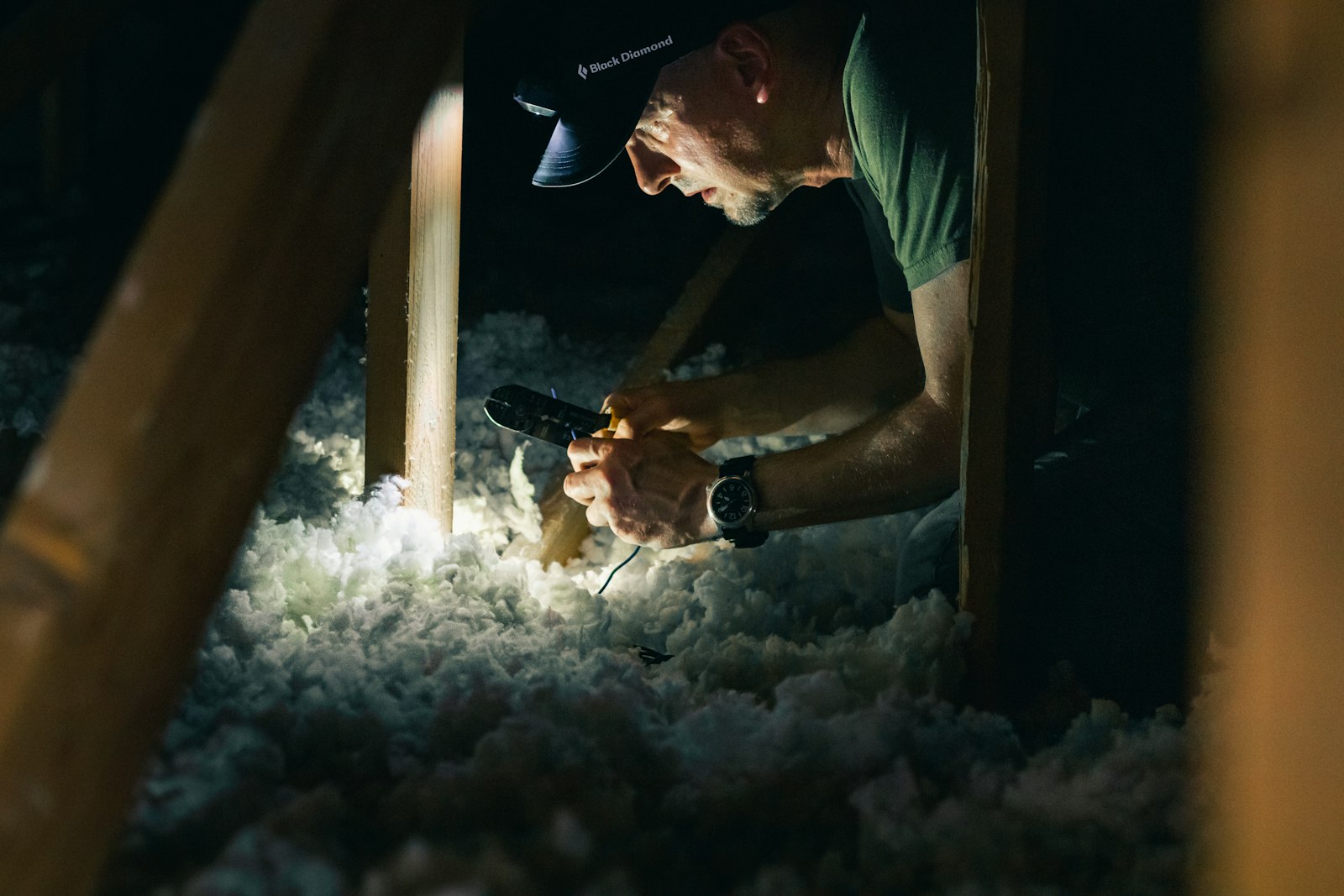
- Go into the attic on a cool dayBring a flashlight and a mask. Stay on the joists or walk boards.
- Look at the eavesWhere the roof meets the outside walls, you should see a channel or baffle between each pair of rafters, keeping a gap above the insulation.
- Look for daylightWith the attic light off, you should see some light coming in at the soffits. None at all usually means they’re blocked.
- Note other signsFrost on nails in winter, damp or darkened decking, or a very hot attic in summer all point to poor airflow.
3Fixing it
Do it yourself
- Pull insulation back from the eave in each rafter bay
- Fit a baffle against the underside of the roof deck
- Push the insulation back against the baffle, not over it
- Repeat for every bay along both eaves
Hire a pro
- The roof is low-pitched and you can’t reach the eaves
- There’s no soffit intake at all and openings need cutting
- You see mold or soft decking
- Insulation needs topping up after
Step only on joists or boards, never on the ceiling between them. Wear a mask, gloves and long sleeves. Watch for wiring and nails coming through the roof deck. Avoid hot summer afternoons.
4What drives the cost
Baffles themselves are inexpensive. The cost is mostly labor and access: how many rafter bays there are, how low the roof pitch is at the eaves, whether insulation has to be moved and replaced, and whether new soffit vents have to be cut in. If you hire it out, it’s usually an insulation job, not a roofing job.
5Questions
Do I need a new ridge vent too?
Usually not. The ridge vent is often fine. It just isn’t getting air from below.
What if I have no soffit vents at all?
Then baffles alone won’t help. See no ridge vent and no soffit intake and turbine vents but no intake at the soffit.
Will this cool my house?
It mostly helps the attic and the roof. Upstairs comfort can improve, but insulation and air sealing matter more for that. See attic feels well over outdoor temperature in summer.
Written by Jaylan Jones. I Like To Exterior Services earns a referral fee when a call connects to a contractor. See our business-model disclosure.

