Trees are good for a house. Shade keeps the roof cooler. The problem is branches touching or hanging low over the roof, and large dead limbs that could fall on it.
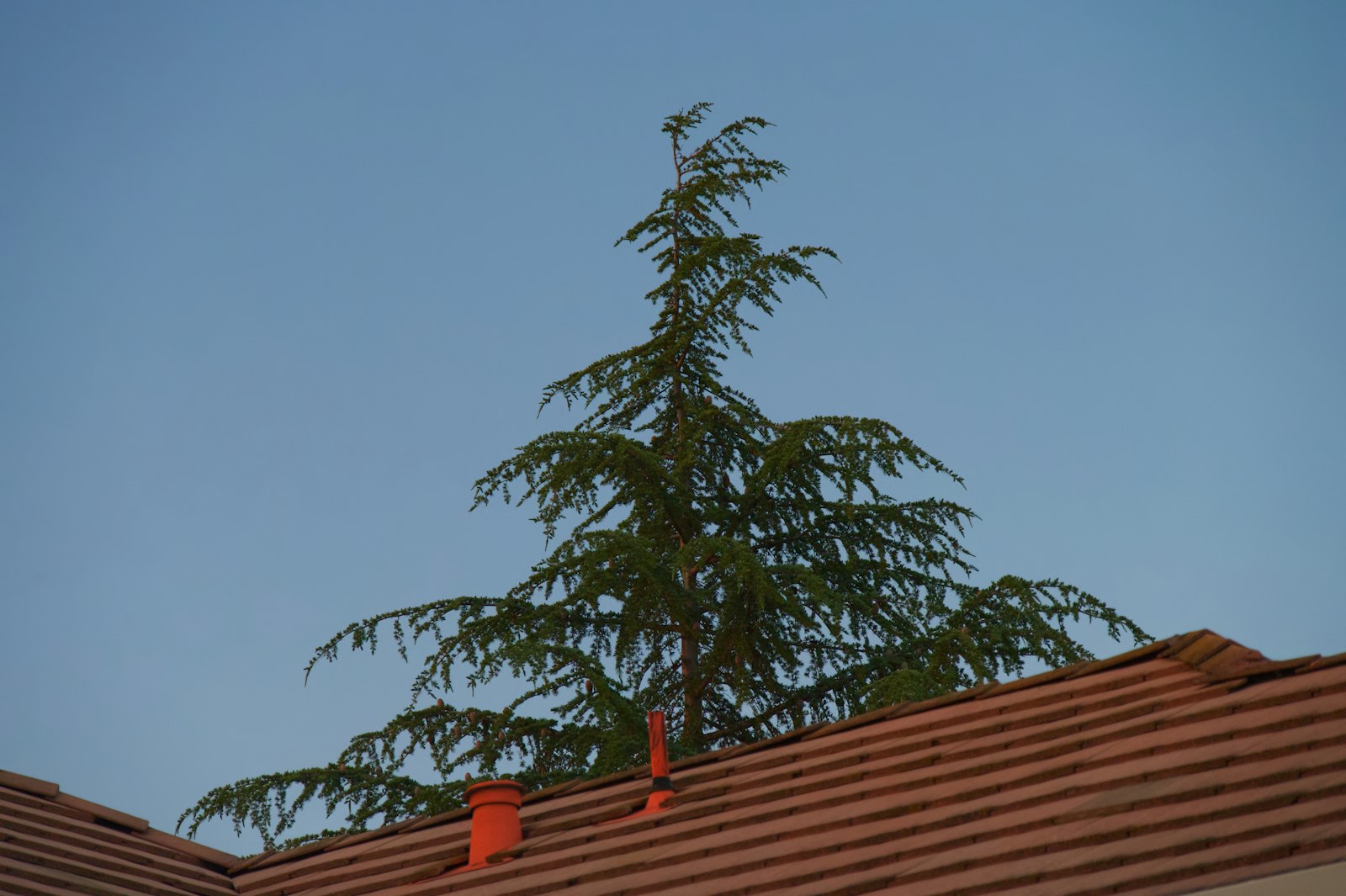
1How limbs damage a roof
- Abrasion. Branches that touch the roof scrub granules off every time the wind blows. Bare spots age fast.
- Debris. Leaves, needles and twigs pile up in valleys and gutters, hold water and slow drainage.
- Damp. Heavy shade keeps the slope wet long after rain, which encourages moss. See persistent damp and organic growth on shaded slopes.
- Falling limbs. Dead or cracked limbs can puncture the roof in a storm.
- Access for animals. Branches give squirrels and other animals an easy path onto the roof.
2How to check
- Look from the ground on a windy dayWatch whether branches reach or brush the roof as they move.
- Look for bare spotsUse binoculars to spot worn patches under branches where granules are gone.
- Check valleys and guttersHeavy debris under a tree tells you it’s dropping onto the roof.
- Look for dead woodLeafless, cracked or hanging limbs over the house should go first.
- Look up for wiresNote any power lines running through the tree. That changes who can trim it.
3Fixing it
Do it yourself
- Small branches you can reach from the ground with a pole saw
- Clearing debris from gutters you can safely reach
- Arranging and scheduling the tree service
Hire a tree service
- Any limb over the roof that’s too big to lower by hand
- Anything that needs climbing or a ladder near the roof
- Dead or cracked limbs over the house
- Any tree near power lines
Never use a chainsaw on a roof or a ladder. Falling limbs swing unpredictably. If a tree is near power lines, contact your utility before anyone trims it.
Ask the tree service how far back to trim for your tree species. A good arborist trims so the tree stays healthy and doesn’t send new growth straight back toward the roof.
4What drives the cost
Tree work is priced by the size and number of limbs, how close they are to the house and lines, whether a climber or lift is needed, and whether debris is hauled away. Roof repair from abrasion or a fallen limb is priced separately. Trimming is almost always the smaller bill.
5Questions
Will my roofer trim the trees?
Usually not. It’s a tree service’s job. Get the trimming done before roof work so new shingles aren’t scrubbed.
Is a limb falling on the roof covered by insurance?
Often, if it’s sudden storm damage. Check your policy.
Should I remove the whole tree?
Usually not. Trimming back limbs over the roof solves most of the problem and keeps the shade.
Written by Jaylan Jones. I Like To Exterior Services earns a referral fee when a call connects to a contractor. See our business-model disclosure.

