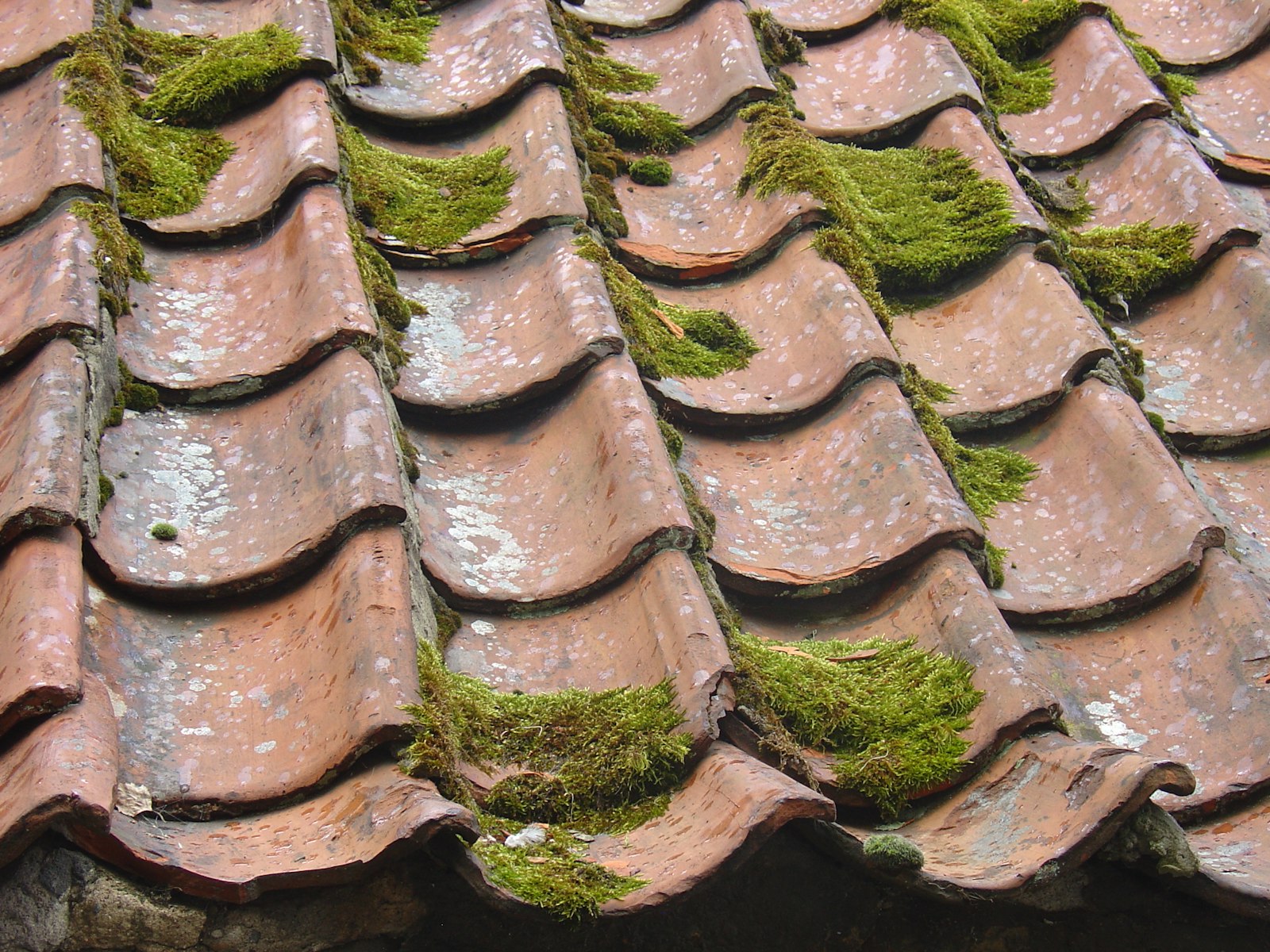
Dark streaks are mostly cosmetic. Thick moss is not. It lifts shingle edges, traps debris and keeps the roof wet. Treat the cause, which is shade and damp, as well as the growth.
1Why one slope suffers
- Little sun. North-facing slopes and slopes under trees dry slowly.
- Humidity. In humid climates, the roof surface may barely dry between rains.
- Debris. Leaves and needles hold moisture and feed growth. See tree limbs over the roof.
- Moss holds water. It acts like a sponge against the shingle and can lift edges as it grows.
2How to check
- Compare slopesUse binoculars. Is the shaded slope darker, greener or rougher than the sunny one?
- Look for raised edgesThick moss can lift shingle edges. Lifted edges let wind-driven rain in.
- Check valleys and guttersDebris and moss collecting there slow drainage.
- Check the atticOn the shaded side, look for damp or stained decking after rain.
- Note what’s shading itTrees you can trim make the biggest long-term difference.
3Fixing it
Do it yourself
- Use a moss treatment labeled for roofs and follow the label
- Let it work, then remove loosened moss gently with a soft brush, working downhill
- Clear debris from valleys and gutters
- Have overhanging limbs trimmed to let in sun and air
Hire a pro
- The roof is steep, high or slippery
- Shingles are lifted, cracked or missing under the moss
- The decking feels soft
A pressure washer strips granules and can force water under shingles. Wet moss is also very slippery. Stay off steep or wet roofs and use a ladder stabilizer if you work from the edge.
Zinc or copper strips near the ridge are a common way to slow regrowth. Rain carries traces of the metal down the slope. Results vary with how much rain and shade you get.
4What drives the cost
Cleaning cost depends on roof size, pitch, height and how thick the growth is. Repair cost depends on whether shingles under the moss are damaged. If one slope is worn out and the rest isn’t, ask whether replacing just that slope makes sense for your roof.
5Questions
Are dark streaks the same as moss?
No. Streaks are usually algae and mostly cosmetic. See moss or dark streaking on north-facing slopes.
Can I just scrape it off?
Not hard. Aggressive scraping removes granules. Treat it, let it loosen, then brush gently.
Will it come back?
Yes, if the slope stays shaded and damp. More sun and less debris make the most difference.
Written by Jaylan Jones. I Like To Exterior Services earns a referral fee when a call connects to a contractor. See our business-model disclosure.

