Home/Concrete cracking causes
Concrete · Why slabs crack
Concrete cracking causes
Concrete cracks because it shrinks as it cures, because the ground under it moves, or because it was not reinforced or jointed properly. Fine shrinkage cracking in the first year is normal. Cracks that widen, step or lift are the ones worth a closer look.
Every slab cracks somewhere; control joints exist to decide where. What matters is why a crack formed and whether it is still moving. That tells you whether to seal it and forget it, fix what is underneath, or plan for a replacement section.
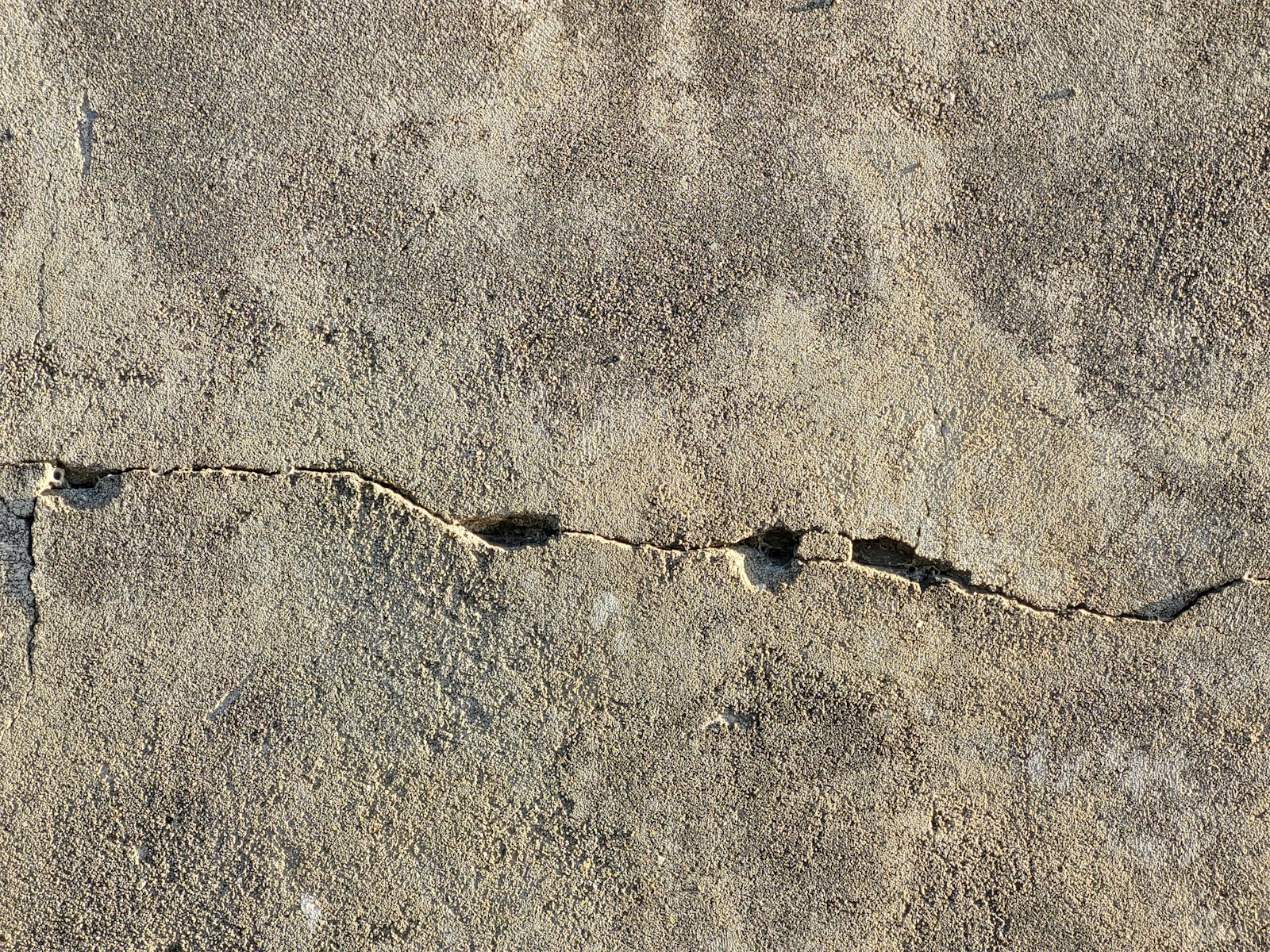
1Why concrete cracks
- Shrinkage as it cures. Concrete loses water and shrinks as it hardens. Without enough control joints, it relieves that stress by cracking on its own, usually as fine, random lines.
- Weather at the pour. Weather at the time of the pour matters more than most people realize. Concrete poured in high heat loses water faster than it gains strength and cracks as a result, so an early start and a proper curing compound or wet cure protect the slab more than the mix specification does.
- Freeze-thaw. Freeze-thaw cycles do the opposite kind of damage later, working water into existing cracks and opening them each winter. The same cycle drives surface spalling.
- Subgrade movement. Poorly compacted fill settles, water washes soil out from under the slab, and tree roots lift sections. Settlement is common next to the garage, where backfill is deep. See driveway settling near the garage.
- Reinforcement and joints. Reinforcement is where cheap quotes get cheap, and you cannot see it once the pour is done. Joints packed with debris stop working as joints. See expansion joints filled with debris.
- Stress points. Inside corners, posts and drains concentrate stress, which is why cracks radiate from corners.
2How to read a crack
- Measure the widthHairline cracks that a fingernail barely catches are typical shrinkage. Wider cracks deserve a closer look.
- Check for offsetRun your hand across it. If one side sits higher than the other, the ground under the slab has moved.
- Mark the endsPencil a line and the date at each end. If the crack grows past your marks over a season, it is still active.
- Watch it after rainWater that pools beside or runs into the crack keeps softening the subgrade. See water pooling on the drive after rain.
3DIY or pro
Do it yourself
- Fine, stable shrinkage cracks
- Clean the crack and seal it with a flexible concrete crack sealant
- Clear debris from joints and reseal them
- Redirect downspouts and fix low spots that send water toward the slab
Hire a pro
- One side of the crack is higher than the other
- The crack keeps widening season after season
- Sections have sunk, lifted or rock underfoot
- Roots, washout or settlement need fixing before any patch will last
A lifted edge on a walk or drive is a trip hazard. Mark it or have it ground or leveled before someone catches a foot on it.
4Preventing cracks in a new pour
Most cracking is decided before the truck arrives. On any new slab, ask specifically what reinforcement is going in, at what spacing, and how it will be held at the right height in the slab rather than lying on the ground. Ask where the control joints will go, how the base will be compacted, and how the slab will be cured.
Rebar or mesh unclear in the quotePour scheduled in extreme heat
5What drives the cost
| Factor | Why it moves the price |
|---|---|
| Seal or repair | Sealing stable cracks is a small job; lifting or replacing sections is not |
| The cause underneath | Roots, washout or poor fill must be fixed first or the crack returns |
| Area affected | One panel versus most of the drive changes repair versus replace |
| Access and removal | Breaking out and hauling old concrete adds labor and disposal |
Concrete costRepair or replace concrete?
Talk to a local concrete contractor who will find what is moving underneath before quoting a patch.
877-360-46576Questions
My new driveway cracked in the first year. Is that a defect?
Fine shrinkage cracking in the first year is normal and not a defect. Wide cracks, offset edges or sunken sections are a different matter and worth raising with the installer.
Should I seal hairline cracks?
Sealing keeps water out, which slows freeze-thaw damage and protects the base. It will not stop a crack caused by movement underneath.
Why do cracks get worse every winter?
Water gets into the crack, freezes and expands, and opens it a little more each cycle.
Written by Jaylan Jones. I Like To Exterior Services earns a referral fee when a call connects to a contractor. See our business-model disclosure.
877-360-4657Talk to a local pro
One free number for every trade below. Tap a button to call, or dial it from any phone.
We are a publisher, not a contractor, and may earn a referral fee when a call connects. How this site makes money.

