Damage from a specific storm may be covered by insurance. Gradual wear usually isn’t. Write down the date of the storm and photograph what you find before anything is repaired.
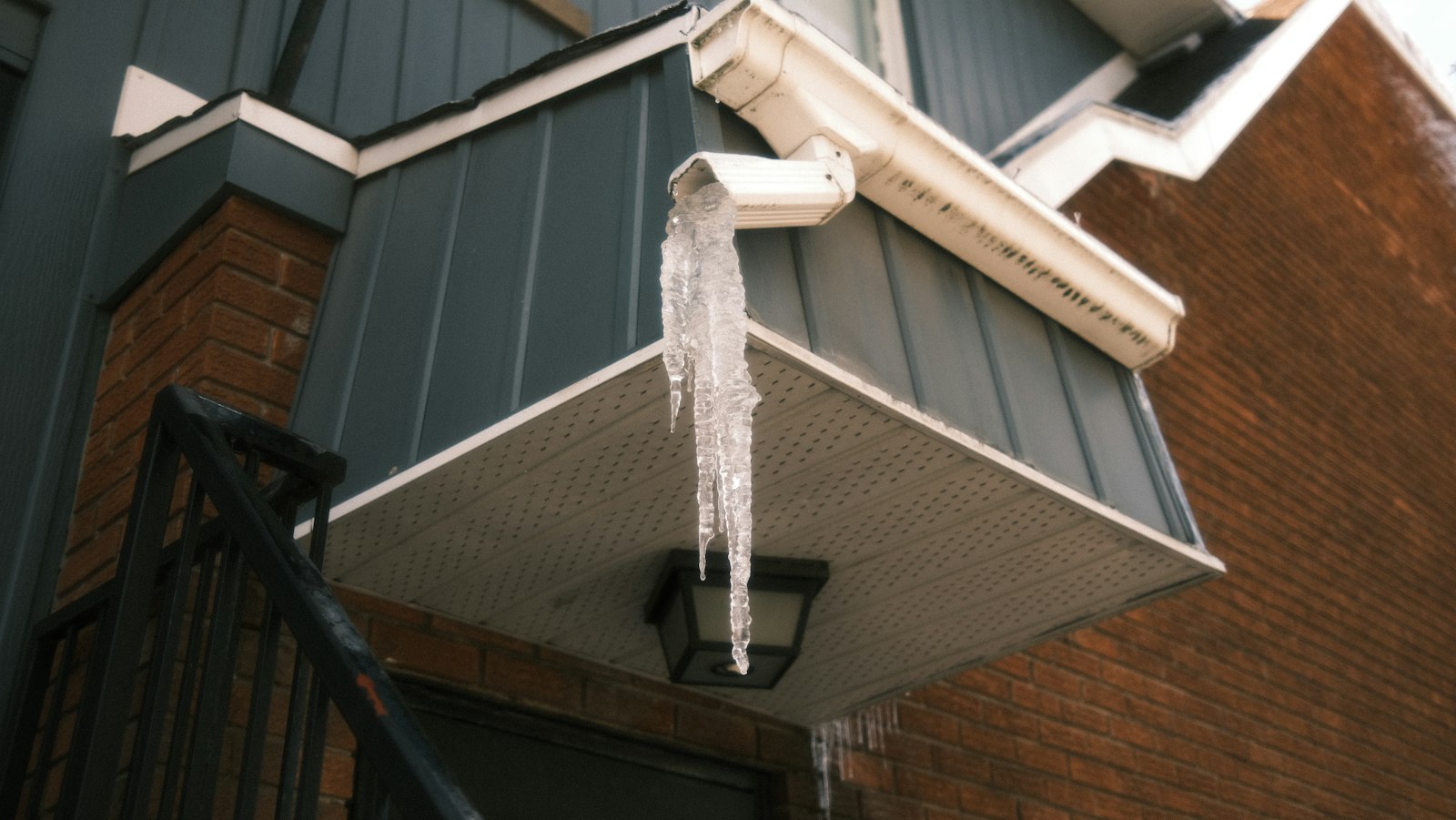
1What ice does to a gutter
- Weight. A run packed with ice carries far more load than water ever puts on it. Hangers bend or pull out of the fascia.
- Expansion. Water that freezes in seams and corners forces joints apart. They leak once it thaws.
- Sliding snow and ice. Sheets coming off the roof catch the front lip and bend it outward or tear sections loose.
- Blocked downspouts. Ice plugs the outlet, so the next melt has nowhere to go and freezes in the trough again.
Melt water runs down a warm roof, refreezes at the cold eave, and backs up under the shingle courses. That is an attic insulation and ventilation issue. Treating it as a gutter problem is how people spend money without fixing anything.
2How to check after the thaw
- Sight the runs from the groundLook for dips, a front edge that leans out, and gaps between the gutter and fascia.
- Watch the next rainNew drips at corners and seams mean joints opened in the freeze.
- Check the downspoutsLook for crushed or split sections and elbows pulled apart.
- Look at the roof edge and ceilingsStains on interior ceilings near outside walls point to an ice dam, not a gutter.
- Photograph everythingWide shots and close-ups, with dates, before any repair.
3Fixing it
Do it yourself
- Reseal a few opened seams on a single-storey run
- Reattach a downspout elbow
- Add hangers where a short section sags, if the fascia is sound
Hire a pro
- Sections are bent, kinked or torn loose
- The fascia is soft or split
- The eave is second-storey
- You are filing an insurance claim and need a written estimate
Hammering or prying ice from a gutter or roof edge damages both and is dangerous on a ladder in winter. Wait for the thaw.
4What drives the cost
Cost depends on how many feet are bent or loose, whether sections can be re-hung or must be replaced, the condition of the fascia, the eave height and whether matching material is available. For a claim, ask for the estimate itemized by section and line.
Talk to a gutter contractor who will document the damage and check the fascia behind it.
877-360-46575Questions
Will insurance pay for ice-damaged gutters?
Damage from a specific event, such as an ice storm, may be covered. Gradual wear and rot usually aren’t. Check your policy and document the damage first.
Do heat cables stop gutter ice?
They can keep a channel open for melt water. They don’t fix the attic heat loss that causes ice dams.
Why did the damage only show up in spring?
Bent hangers and opened seams are hard to see under snow. They show once the ice melts and rain runs through the gutter again.
Written by Jaylan Jones. I Like To Exterior Services earns a referral fee when a call connects to a contractor. See our business-model disclosure.
877-360-4657Talk to a local pro
One free number for every trade below. Tap a button to call, or dial it from any phone.
We are a publisher, not a contractor, and may earn a referral fee when a call connects. How this site makes money.

