After a hard winter, look at the roof edge, the gutters and the ceilings below them before the spring rains. Damage tied to a specific storm is easier to document while the date is fresh.
This is most common in homes built roughly 1940 to 1980. Post-war and mid-century — copper supply, aging cast iron stacks, 60 to 100 amp panels, first-generation central air.
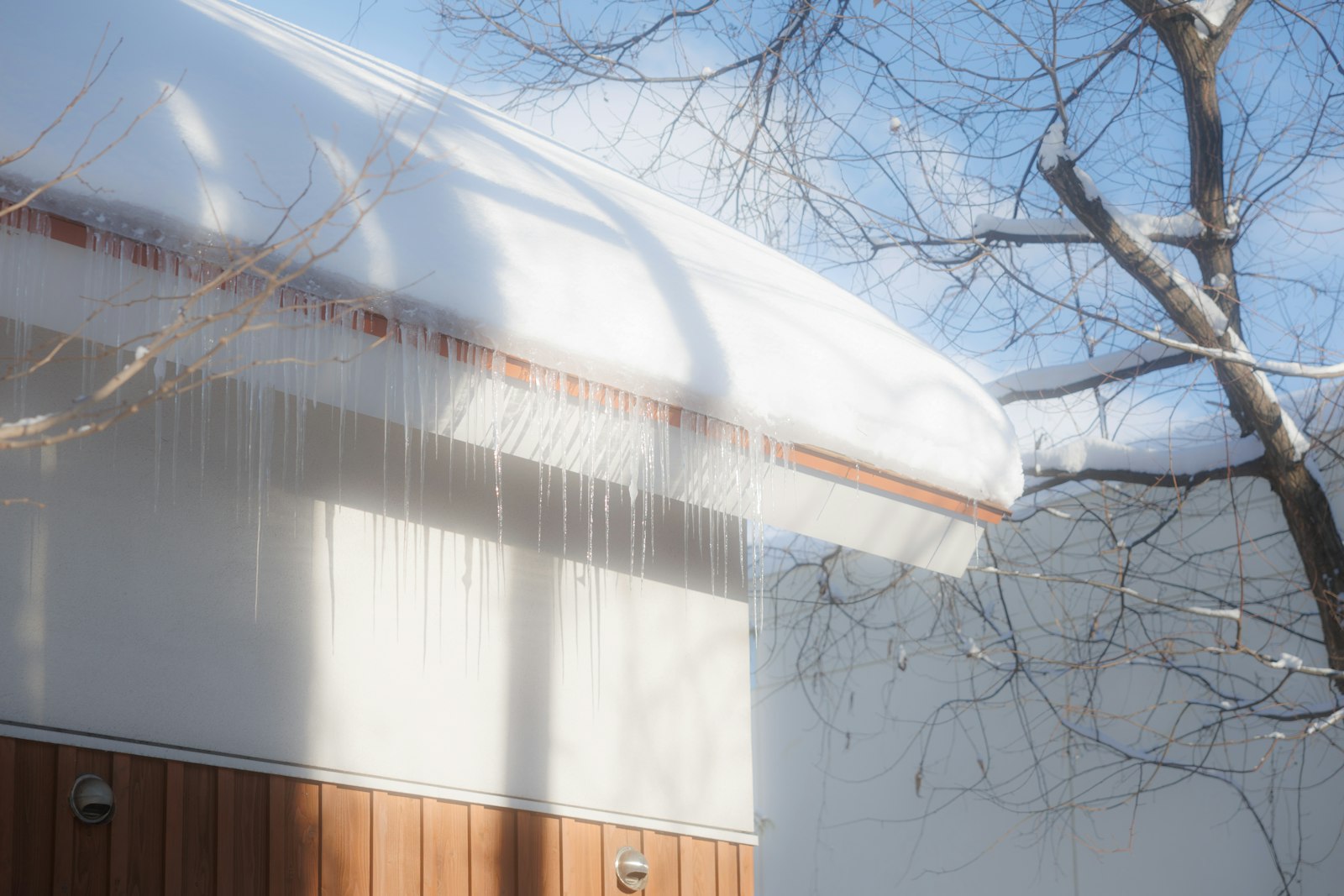
1How ice does the damage
- Weight. Ice packed in a gutter is very heavy. It bends hangers and pulls the gutter, and sometimes the fascia, away from the house.
- Ice dams. Snow melts higher on the roof, refreezes at the colder eave, and pools water behind the ridge of ice. That water backs up under the shingles.
- Freeze and thaw. Water that gets under shingles or into seams expands as it freezes, opening gaps further.
- Removal damage. Chipping or scraping ice off the roof breaks shingles and tears gutters.
2How to check after the thaw
- Walk the house from the groundLook for gutters that sag, have pulled away or are bent, and for shingles at the eaves that look lifted or broken.
- Check ceilings and wallsLook for stains along exterior walls, especially under the eaves and around window heads.
- Go into the atticLook for wet insulation or staining on the roof deck near the eaves.
- Write down the datesNote when the storm hit and when you first saw damage. Take dated photos.
Hacking at ice dams breaks shingles and can tear off gutters. Don’t climb onto an icy roof or set a ladder on frozen ground. Wait for the thaw or call a pro who does safe ice-dam removal.
3Fixing it
Do it yourself
- Documenting the damage with dated photos
- Clearing loose debris from gutters once they’re safe to reach
- Moving belongings away from active drips
Hire a pro
- Re-hanging or replacing gutters and checking the fascia behind them
- Replacing broken or lifted shingles at the eave
- Checking whether the underlayment at the eave protects against ice backup
- Finding why ice formed: attic heat loss or ventilation
Repairing the damage without fixing why the ice dams formed means the same thing next winter. Attic insulation and ventilation are usually part of the answer.
4What drives the cost
The price depends on how much gutter and fascia came loose, how many eave courses need replacing, whether water reached the deck or ceilings, and whether attic ventilation or insulation needs work. Sudden storm damage may be covered by insurance. Check your policy and its filing deadline.
Talk to a roofer who will check the eaves, the gutters and the deck edge together.
877-360-46575Questions
Is ice damage covered by insurance?
Damage from a specific storm often is, subject to your deductible. Gradual wear usually isn’t. Read your policy and report it within its window.
Why did the leak only start in spring?
Water that backed up under shingles in winter can take weeks to show. Spring rain then finds the same gaps.
Do heat cables stop ice dams?
They can keep a channel open at the eave, but they treat the symptom. Reducing heat loss into the attic addresses the cause.
Written by Jaylan Jones. I Like To Exterior Services earns a referral fee when a call connects to a contractor. See our business-model disclosure.
877-360-4657Talk to a local pro
One free number for every trade below. Tap a button to call, or dial it from any phone.
We are a publisher, not a contractor, and may earn a referral fee when a call connects. How this site makes money.

