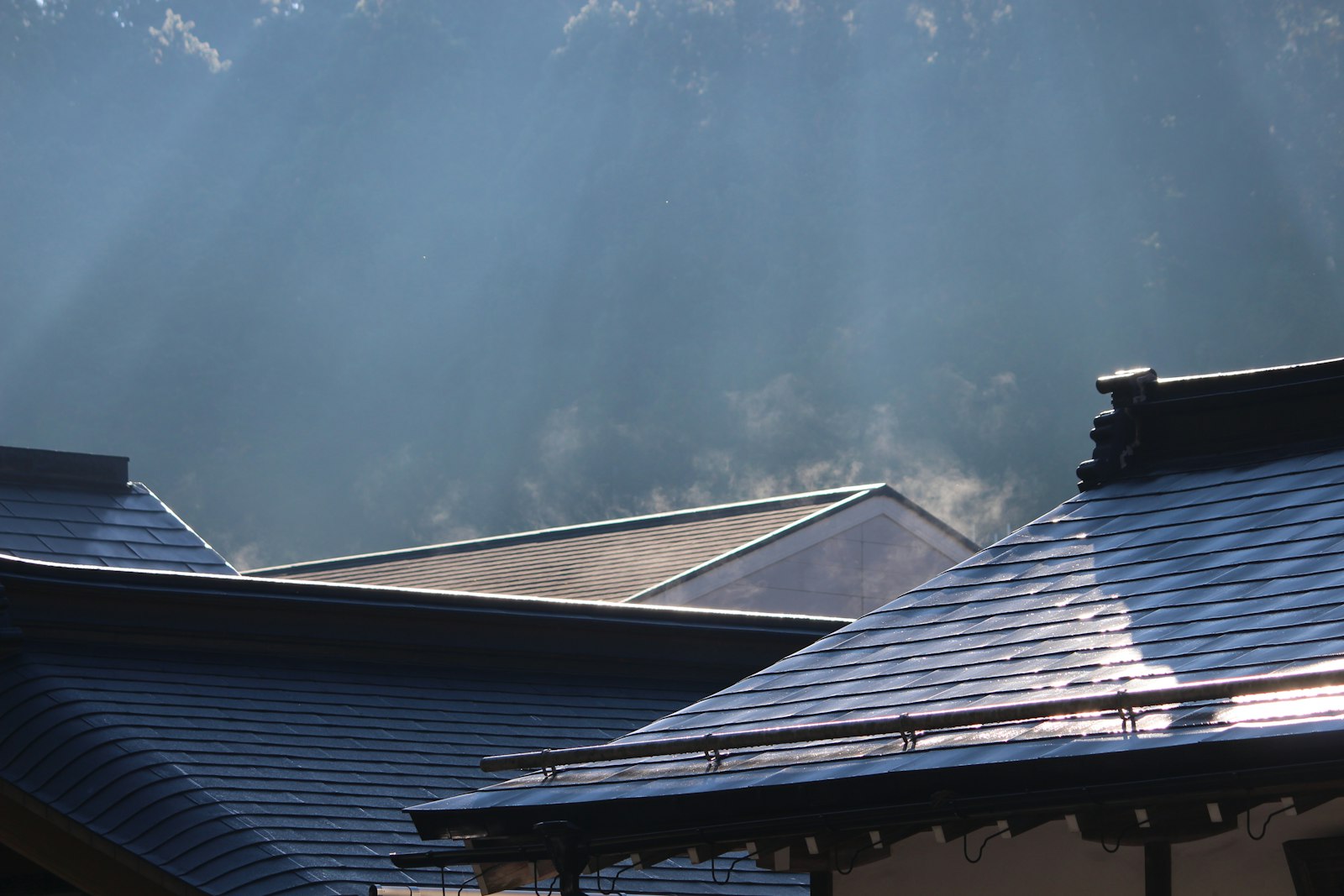
Sun and heat dry out the asphalt in shingles and harden rubber parts. It’s slow, steady wear rather than sudden damage, so it shows up as a roof that seems to age faster than the neighbors’ shaded ones.
1What full sun does
- Shingles age faster. Heat and sunlight dry out the asphalt. Shingles get brittle, lose granules and curl sooner.
- Granules matter. Granules shield the asphalt from sunlight. Bare spots age much faster.
- Pipe boots crack early. Rubber seals around plumbing vents harden and split in the sun. See cracked rubber boot around a plumbing vent.
- Some slopes get more. Slopes facing the afternoon sun usually wear first.
- Attic heat adds to it. Poor ventilation lets the roof deck run hotter. See attic feels well over outdoor temperature in summer.
2How to check
- Look at the pipe bootsUse binoculars. Look for cracks or gaps in the rubber around each vent pipe.
- Compare the slopesThe sunniest slope may look lighter, smoother or more curled than the others.
- Check the guttersLots of granules at the downspouts point to a surface wearing away.
- Check the attic after rainLook for stains around vent pipes, where cracked boots leak first.
- Know the roof’s ageCompare it with the product’s rated life. Expect a sun-baked roof to get there sooner.
3What to do about it
Do it yourself
- Check boots and slopes once or twice a year
- Replace a cracked boot on a low, single-storey roof if you’re comfortable there
- Make sure the attic is ventilated
- Plan the replacement budget earlier
Hire a pro
- Boots on a steep or second-storey roof
- Widespread curling, cracking or bare spots
- Leaks around vents or into the attic
Shingles get soft and slippery in full sun, and they scuff easily. Work early in the day, stay off steep slopes, and don’t go up alone.
When you do replace, ask about lighter-colored or reflective shingle options. They may run cooler in full sun. Check whether your area has any rules about roof color.
4What drives the cost
A pipe boot is a small repair. Price moves with roof height, pitch and how many boots need doing. Shingle replacement depends on roof size, pitch, layers to remove, decking condition and the product. On a sun-exposed roof the main cost effect is timing: you’ll likely pay for replacement sooner.
5Questions
Should I plant trees for shade?
Shade helps, but keep limbs off the roof. See tree limbs over the roof.
Can I coat shingles to protect them?
Be careful. Some coatings can affect the shingle warranty. Check with the manufacturer first.
Is curling always from sun?
No. Ventilation and age play a part too. See three-tab shingles curling at the edges.
Written by Jaylan Jones. I Like To Exterior Services earns a referral fee when a call connects to a contractor. See our business-model disclosure.

