Home/Roofing/Builder-grade subdivision roofs
Roofing · Newer builds
Builder-grade shingle on a whole subdivision
Production builds get the specified minimum, and the whole street ages together. If neighbors are replacing after a storm, an inspection is reasonable even if your roof looks fine from the ground.
This is most common in homes built since 2000. Builder-grade equipment and materials tend to reach the end of their life across a whole street at once, and the roof is often the first big one.
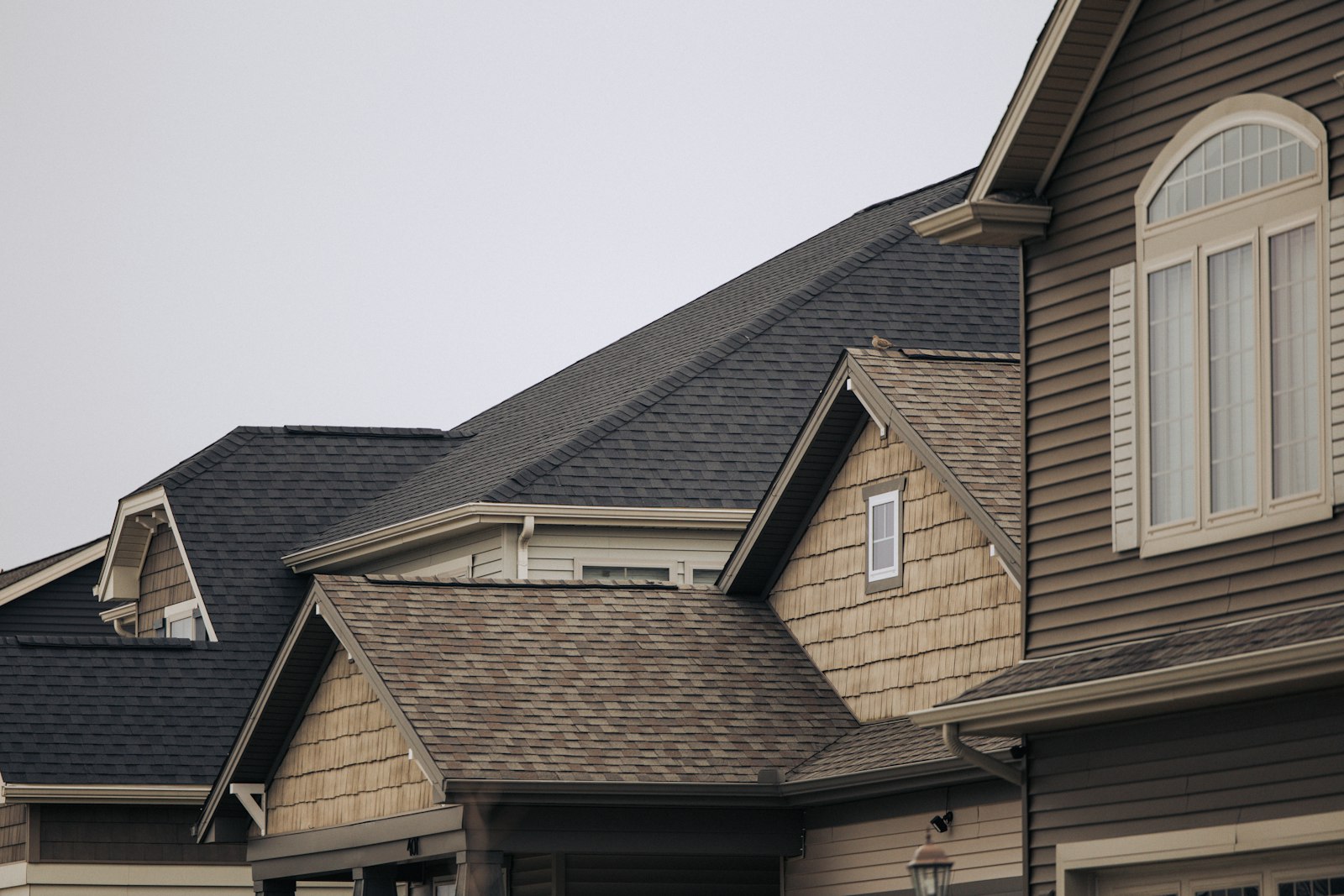
1Why the whole street moves together
- Same product, same year. Every roof started its life at the same time with the same shingle.
- Same weather. A hail or wind event usually covers the whole neighborhood, not one house.
- Same crews. Volume builds use the same installers across many houses. A workmanship shortcut on one is often on all of them. See improper nailing from the original install.
- Same details. Ventilation shortcuts, such as a ridge vent without soffit baffles, repeat from house to house.
2How to check yours
- Watch the neighborsDumpsters and roofing crews on your street after a storm are a strong hint that the storm did real damage.
- Look from the groundUse binoculars. Look for missing or lifted shingles, dark patches where granules are gone, and dented metal vents.
- Check gutters and downspoutsHeavy granules at the outlets or fresh dents in soft metal are worth noting.
- Look in the atticOn a dry day, check for stains, damp insulation or daylight around penetrations.
- Find your paperworkKnow the install date and whether a warranty is still live. See roof still under the manufacturer warranty.
3What to do next
Do it yourself
- Ground-level and attic check
- Ask neighbors what their inspectors found
- Note the storm date and photograph any damage
- Read your policy and deductible
Hire a pro
- You see damage or a leak
- Neighbors’ roofs were approved as storm damage
- You want a close inspection you can’t safely do yourself
Ask a neighbor who just replaced what product went on and who did the work. It’s free information about local pricing and crews.
If you’re replacing anyway, you don’t have to match the original builder grade. You can choose a better product than the plans called for.
4What drives the cost
Roof size and pitch, the product you pick, how many layers come off, the condition of the decking, and how busy local crews are after a storm all move the price. A storm claim changes who pays, not what the work involves.
5Questions
My roof looks fine. Do I need to do anything?
Not necessarily. But if your neighbors had storm damage approved, the same storm hit your roof. A close look is reasonable.
Is builder-grade shingle bad?
No. It meets the specification. It’s simply the entry-level product, and it ages on the same schedule as the rest of the street.
Should I upgrade when I replace?
It’s worth pricing, especially in hail country. See impact-resistant shingle and the insurance discount.
Written by Jaylan Jones. I Like To Exterior Services earns a referral fee when a call connects to a contractor. See our business-model disclosure.

